

Donald Trump’s Suez Moment
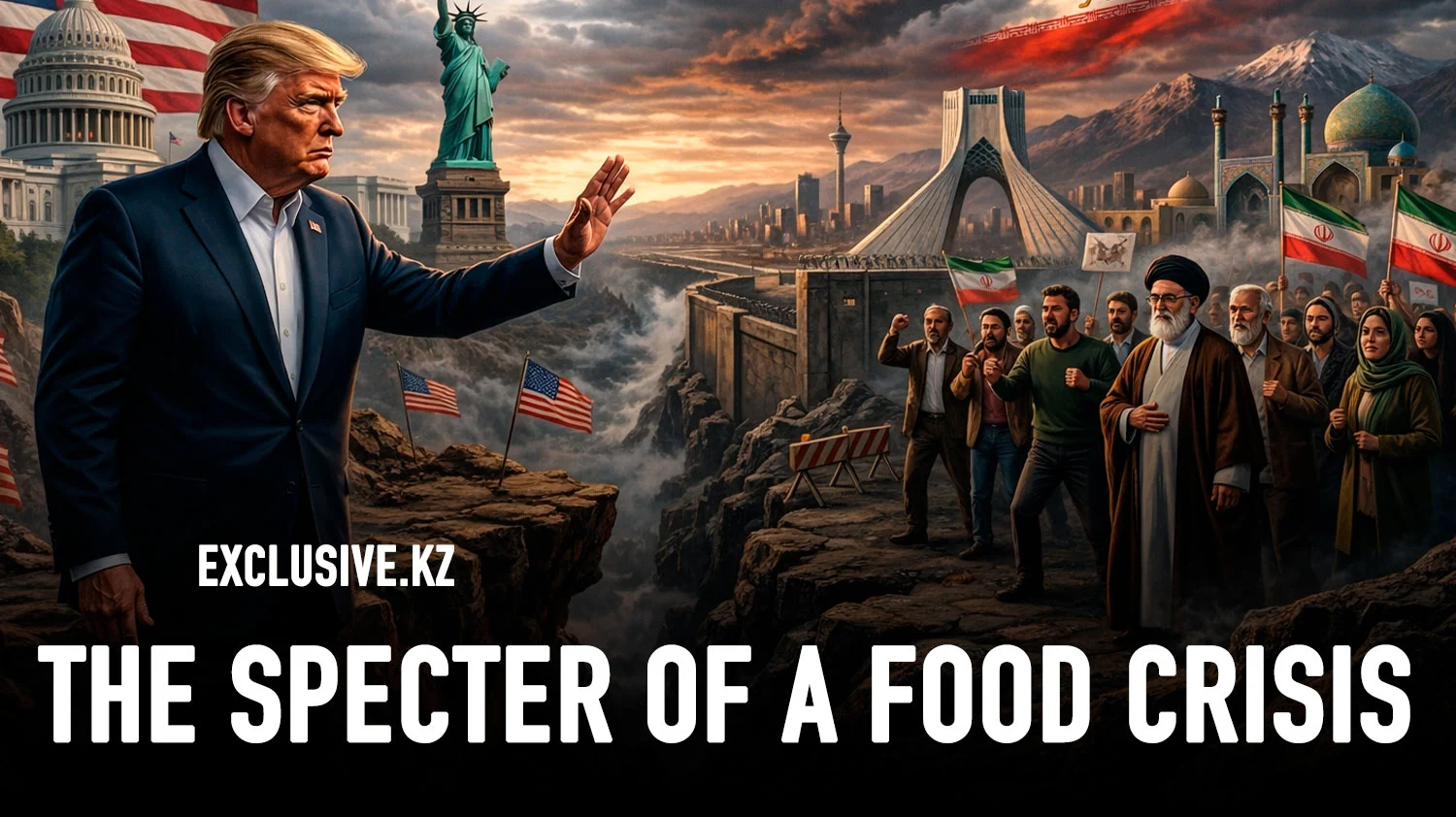
War is always a gamble. That is true even when leaders call it something else, like “special military operation” (Russian President Vladimir Putin’s evasive name for his full-scale invasion of Ukraine) or “excursion” (US President Donald Trump’s preferred term for his attack on Iran).
- October 29, 1956: Israel launched an attack on the Sinai Peninsula to break an Egyptian blockade of the Straits of Tiran and the Gulf of Aqaba; two days later Britain and France entered with Operation Musketeer to seize the Suez Canal from Egyptian control.
- The Suez attack failed; the canal remained closed for six months and both Britain and France were discredited politically; Eisenhower and Dulles were furious.
- The Suez crisis contributed to a financial panic and compelled Britain and France to liberalize their exchange-rate systems and move toward current-account convertibility under a US-dominated international framework.
- Russia’s full-scale invasion of Ukraine began in 2022 as a quick, surgical attempt to install a puppet regime but turned into a protracted conflict with broader economic and humanitarian costs.
- Russia’s invasion sharply affected world food supplies as Russian and Ukrainian grain and fertilizer exports from Black Sea ports were disrupted; Russia faced heavy sanctions and economic hardship at home.
- The article notes a 2026 context where the US may not be able to deliver a decisive outcome in the Middle East, drawing a parallel to Suez with possible humiliation and a shift toward economic openness and policy reconsideration.
- A year before the latest attack on Iran, Trump held an Oval Office meeting with Vice President JD Vance in which they pressured Ukrainian President Zelensky; Zelensky warned that they would feel consequences in the future.
Of course, high stakes gambles do sometimes pay off. The US-Israeli attack on Iran may yet produce a radical change in that country’s politics, allowing for a more tolerant regime that will open the country, engineer an economic miracle, clear the landmines, and supply the world with oil. If this came to pass, Trump would look brilliant, or at least like a high-stakes gambler who had pulled off the big one.
As the excursion drags on, however, memories of past failed gambles will start to stand out, offering depressing precedents for the current crisis of American power. For example, one might point to the drama of 1914, when the leaders of crumbling imperial systems in Russia and Austria thought they could stabilize things with a “short victorious little war” (at least they called it what it was). But two more recent experiences are even more striking and relevant: those of Britain and France in Egypt in 1956, and Putin’s own blunder in 2022.
The first began on October 29, 1956, when Israel launched an attack on the Sinai Peninsula to break an Egyptian blockade of the Straits of Tiran and the Gulf of Aqaba. Two days later, without consulting the United States, Britain and France entered the fray with “Operation Musketeer,” which aimed to seize the Suez Canal, a globally critical shipping route, from Egyptian control. British and French leaders wanted nothing less than to overthrow Egyptian President Gamal Abdel Nasser, believing that the US would appreciate the operation’s logic and boldness. As they saw it, success would restore their countries’ global preeminence.

But the attack failed, and the canal remained closed for six months. British and French politics were left deeply polarized, and both countries’ leaders were discredited. US President Dwight D. Eisenhower and US Secretary of State John Foster Dulles were furious, not least because the Suez operation distracted attention from what they saw as the main global challenge: Soviet imperialism, which was on full display when tanks stormed into Hungary four days later to crush a movement for democratic reform. Indeed, the British-French Suez gambit may well have convinced Soviet leader Nikita Khrushchev to launch his own.
The political fallout from the Suez crisis included a financial panic that forced the British to seek assistance from the International Monetary Fund, which had been largely somnolent until then. Ultimately, both Britain and France would have to open their exchange-rate systems, limit their currency controls, and move to current-account convertibility, ending restrictions on trade payments. In other words, the two big western European countries were both obliged to liberalize under the watchful eye of a US-dominated international institution.
The second precedent is Russia’s full-scale invasion of Ukraine. Intended as a quick, surgical strike to decapitate Ukraine’s democratically elected leadership and install a puppet regime (akin to what Trump recently managed to do in Venezuela), the Russian army’s spectacular incompetence soon turned the special military operation into a quagmire.
One of the most immediate broader threats was to world food supplies, since exporting Russian and Ukrainian grain and fertilizer from Black Sea ports became impossible. Isolated and heavily sanctioned, Russia’s costs mounted as ordinary Russians were forced to endure high inflation and economic hardship. It remains to be seen how Russia will get out of its economic, political, and humanitarian mess.
The British-French Suez blunder at least was mercifully brief; it humiliated both countries and shattered their international ambitions. Putin’s operation, by contrast, has dragged on for years. Whether the massive number of casualties – 1.2 million, with perhaps a half-million dead – will impel Russia to cast off its imperial pretensions remains impossible to predict. Many Russians will see a failure to subdue Ukraine as a betrayal of the dead.
In any case, the US is beginning to confront its own predicament in the Middle East. Exactly a year before this latest attack on Iran, Trump held a highly visible (engineered for television) Oval Office meeting in which he and Vice President JD Vance browbeat Ukrainian President Volodymyr Zelensky.
Zelensky responded by telling them that that “during the war, everybody has problems, even you. But you have nice ocean and don’t feel [it] now, but you will feel it in the future.” Trump then raised his voice: “You’re in no position to dictate what we’re going to feel. We’re going to feel very good and very strong. You right now are not in a very good position. You’ve allowed yourself to be in a very bad position. You don’t have the cards right now.”
What a difference a year makes. The ocean is not protecting Trump from higher prices and rising public dissatisfaction with his administration. Questions abound about the run-up to the war and whether there was any plan for Iran’s closure of the Strait of Hormuz. It is increasingly looking as if the US may not have the cards to deliver the fait accompli that Trump hoped for.
The longer-term fallout may look like the Suez story in reverse: a humiliation, followed by a reconsideration of policy, and a new commitment to thinking about how economic openness can be restored. Like Britain and France after 1956, and like Russia today, the US won’t be able to resolve a crisis it created on its own.
Copyright: Project Syndicate, 2026. www.project-syndicate.org
Cover illustration generated using AI



Все комментарии проходят предварительную модерацию редакцией и появляются не сразу.