

Marco Rubio’s Sugar-Coated MAGA
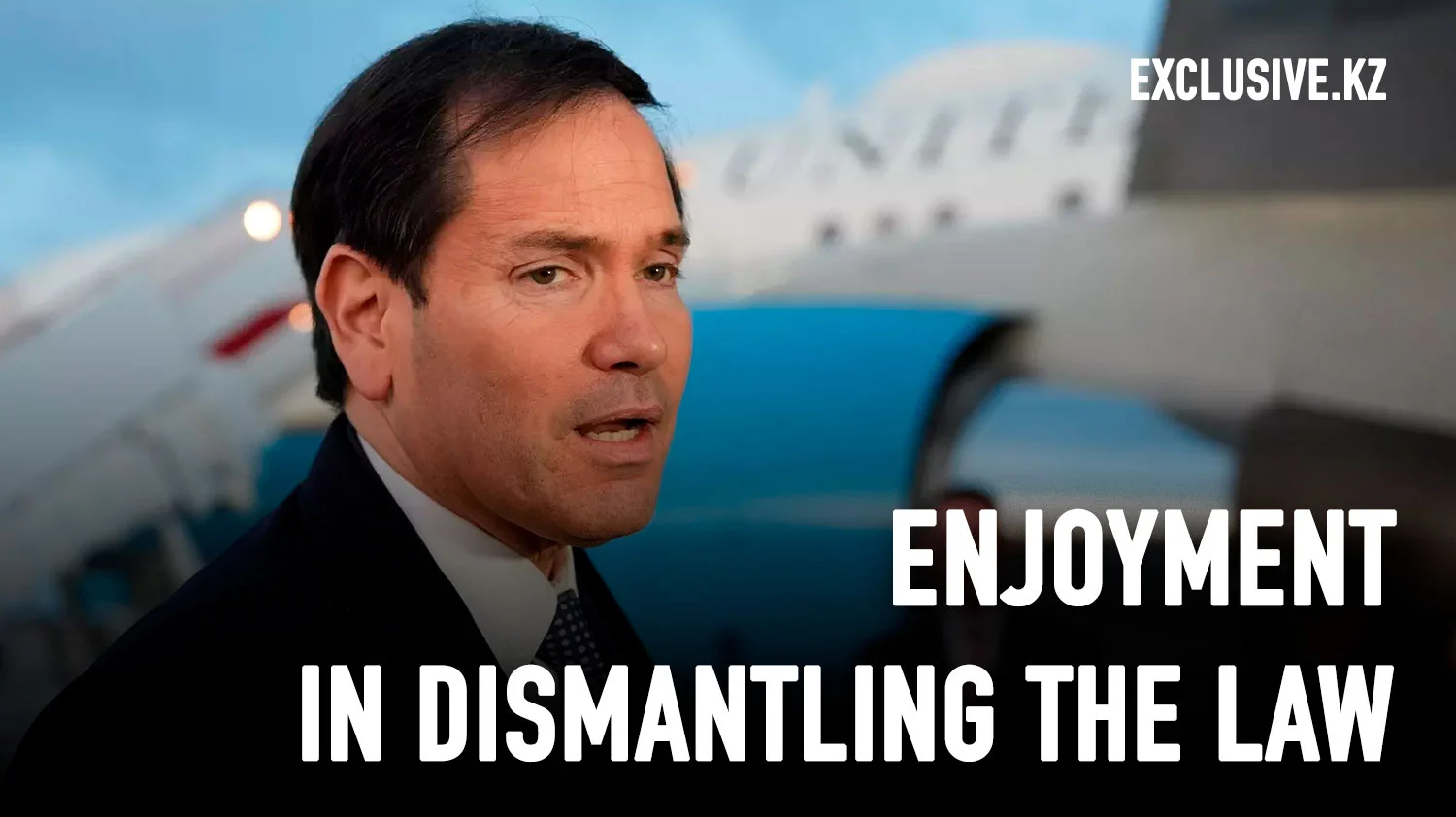
As soon as US Secretary of State Marco Rubio rose to address this year’s Munich Security Conference, it was evident that the Trump administration intended to change its rhetoric toward America’s longstanding European allies. While Vice President JD Vance used his remarks last year to hector and insult European leaders, Rubio seemed eager to flatter. After paying homage to European history and culture – highlighting various achievements, from the Sistine Chapel to the Beatles – he acknowledged that the United States is itself a child of Europe.
It all sounded very nice to European ears after a year that had horrified everyone committed to the transatlantic relationship. Not only has the administration Rubio represents accused Europe of inviting “civilizational erasure.” It has even threatened to seize Greenland, the sovereign territory of a fellow NATO member (Denmark). Was Rubio signaling a change?
On the contrary, after the applause died down, it soon became obvious that the Trump administration’s basic message remains the same. Both in its substance and its perspective on the world, Rubio’s speech revealed a deep gulf between the Trump administration and the Europeans in the room. Notably, Russia’s war of aggression against Ukraine was mentioned only in passing, and with nary a hint of criticism of Russian President Vladimir Putin. Yet with casualties around 1.2 million, a front line stretching 1,200 kilometers (746 miles), and more than 400 Russian attack drones targeting Ukrainian infrastructure and civilian centers the previous week, one would think the horror show playing out on NATO’s eastern flank would merit some mention.
The threat that Russia poses is a dominant concern for Europeans, because they recognize that the defense of Ukraine today is vital to European security tomorrow. For the Trump administration, however, the issue does not even bear mentioning. In terms of basic threat perceptions, the gulf between the US and Europe could hardly be wider.

Before praising European culture and history, Rubio outlined the MAGA, funhouse-mirror version of events leading up to the present moment. The decades since the end of the Cold War were based on a “dangerous delusion” and a “dogmatic vision of free and unfettered trade,” he argued. The “rules-based global order” is “an overused term” that ignores the lessons from 5,000 years of human history and has driven too many societies to “appease a climate cult.”
It is no secret that the “rules-based order” is a MAGA bogeyman. Another member of the Trump administration in attendance, Elbridge Colby, the grandson of Richard Nixon’s CIA director, William Colby, noted with satisfaction that he had heard the term mentioned only once at a recent NATO ministerial meeting.
Obviously, no European outside of the continent’s most extreme political fringes shares this attitude. We understand that the rules-based global order was never perfect, and that anyone who is inclined to list its failures and shortcomings can do so easily. But we also know that its achievements following the last bloody conflict between great powers have been close to miraculous.
During the decades-long period of relative peace and stability following World War II, the global population tripled, life expectancy doubled, and the world economy grew 15-fold. It was the longest period without a war between great powers since the end of the Roman Empire. There simply is no denying that networks of global rules, norms, and agreements were a key factor in making this possible.
Nor is there any doubt that the rules-based order is under severe threat. Russia’s invasion of Ukraine was a blatant violation of one of its most fundamental rules: respect for territorial integrity. Similarly, China has ignored international judgments concerning its territorial claims in the South China Sea, and the Trump administration has violated rules and norms with gleeful abandon. In addition to disparaging the United Nations and launching a trade war against the entire world, it has broken numerous international agreements and withdrawn the US from international bodies that oversee everything from global health to climate change.
By contrast, Europeans believe that what remains of the rules-based order is worth preserving. In fact, they are taking pains to strengthen many of its core pillars. That is what the European Union’s new free-trade agreements with South America’s Mercosur bloc (Argentina, Brazil, Paraguay, and Uruguay) and India are about. Moreover, Europeans are joining with others to maintain global progress on combating climate change and mitigating health threats.
Europe has no interest in a world subject to the capricious whims of the mighty, where rights have no meaning because the vulnerable can always be thrown to the wolves. Rubio’s remarks didn’t go quite that far, but statements from others in the Trump administration have. America’s top diplomat may have offered a kinder, gentler presentation than his master would have given, but the message was the same. The transatlantic divide has become massive, and it is still widening.
Copyright: Project Syndicate, 2026. www.project-syndicate.org

Все комментарии проходят предварительную модерацию редакцией и появляются не сразу.