

Mutual destruction of the US and Iran
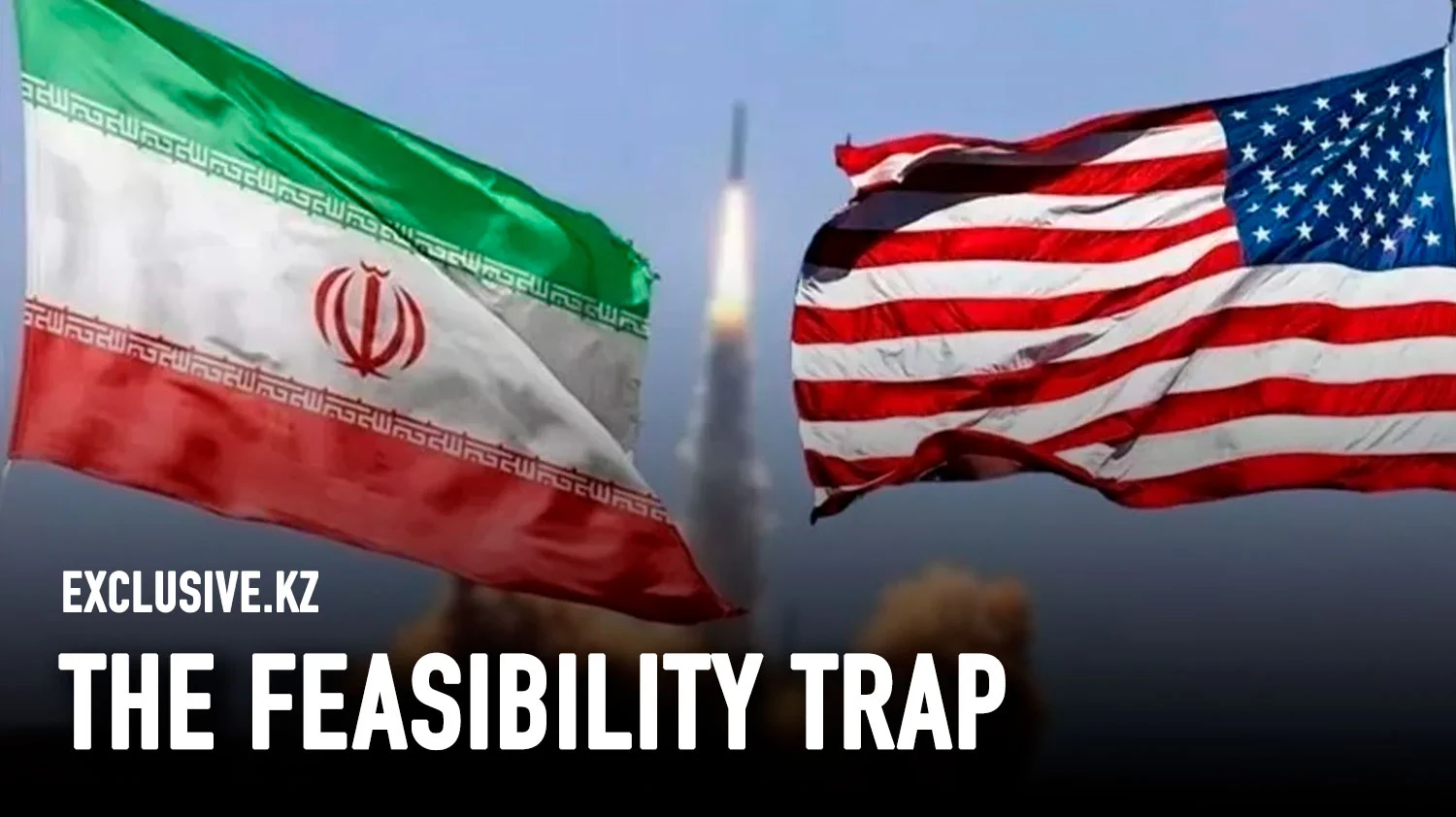
The US-Israeli war with Iran is a striking illustration of an all-too-common phenomenon: feasibility bias. The tendency to favor actions primarily because they are technically or operationally possible, rather than because they are strategically optimal, can lead to decidedly suboptimal outcomes.
- The US-Israeli war with Iran illustrates feasibility bias, where actions are chosen for being technically possible rather than strategically optimal.
- Israel and the United States reportedly organized strategy around joint capabilities to strike the Iranian leadership, expecting political consequences to be managed afterward.
- Iran’s response is described as being determined by the number, range, and accuracy of missiles and drones, and its saturation attacks aim to overwhelm defenses and impose costs.
- Iran attacked its non-aggressor neighbors rather than Gulf Cooperation Council countries to score a feasibility point.
- The article cites The Guns of August to compare current decision-making, noting how operational plans can develop an internal logic that moves diplomacy aside.
- Colin Gray’s concept of a 'strategy bridge' is referenced, arguing that operational success without political purpose can be self-defeating and erode the link between strategy and operations.
Consider the warring parties in this conflict. Military operational feasibility, rather than broader strategic judgment, seems to be governing their decisions. Israel and the United States appear to have organized their strategy around their joint capabilities to strike the Iranian leadership. The decision was taken to use these capabilities, with the expectation that the political consequences could be managed afterward.
Iran’s response, meanwhile, is largely determined by the number, range, and accuracy of its missiles and drones, and rests on the assumption that saturation attacks can overwhelm defenses and impose severe costs on its adversaries. Thus, instead of refraining from launching drones and missiles at Gulf Cooperation Council countries, which could have leveraged their clout with the US to act as intermediaries to bring an end to the war, Iran opted to attack its non-aggressor neighbors to score a feasibility point.
From a purely military perspective, there is nothing unusual in this logic. Military planning has always been shaped by operational capabilities. What is striking, however, is that strategy itself now seems to flow from feasibility, rather than the other way around.

In The Guns of August, Barbara Tuchman’s classic study of the rush to war in 1914, the American historian documented how Europe “sleepwalked” into World War I. The operational plans, she argued, had developed an internal logic so consuming that by August 1914, generals could credibly insist that diplomacy was no longer possible – that the mobilization timetables had their own momentum, and that no one could stop the troop trains once they began moving. Instead of shaping political decisions, operational logic replaced them.
The parallel with the current conflict is uncomfortable. Each actor’s strategic posture flows directly from what its technology allows it to do: one side launches missiles and drones and lays anti-ship mines, while the other side intercepts missiles and drones and launches airstrikes. The result is a dynamic in which decisions are driven less by long-term strategic calculation than by the operational possibilities created by intelligence and technology.
The psychological dimension of this dynamic is captured by Abraham Maslow’s famous aphorism: “it is tempting, if the only tool you have is a hammer, to treaty everything as if it were a nail.” Military capabilities can have the same effect on strategic thinking. Once governments possess advanced capabilities, operational success begins to appear more plausible, and policymakers may be more willing to consider deploying them.
In fact, policymakers may come under institutional pressure to do so. Technologies that require large investments – from missile defense systems to aircraft carriers to cyber operations – tend to produce constituencies committed to their use. Demonstrating the effectiveness of these systems becomes part of the institutional logic that sustains them. The result is the same: a capability’s mere existence may gradually evolve into an argument for its deployment.
Recall US President Donald Trump’s rhapsodic admiration for “those beautiful B-2 bombers” that “totally obliterated the nuclear potential … of Iran.” Likewise, commanders of Iran’s Islamic Revolutionary Guard Corps (who are widely regarded as overseeing political decision-making) have boasted about hypersonic ballistic missiles that “will be able to breach all the systems of anti-missile defense” and represent “a great generational leap in the field of missiles.”
This enthrallment produces a subtle transformation in decision-making logic. The central question is no longer, “Is this strategically wise?” It is, “Can this be done successfully?” Once the answer to the second question is yes, the first question may be asked less forcefully – or not at all.
The feasibility trap explains the strategic fog surrounding American decision-making in the current conflict. The late British strategist Colin Gray called it the failure to maintain the “strategy bridge”: the connective tissue that must link military action to political purpose if force is to serve any rational end. Gray argued that operational success which fails to cross that bridge is not merely incomplete but potentially self-defeating.
Technological capability widens the menu of tactical options available to leaders, but it does not necessarily widen their strategic freedom. Instead, it reshapes influence inside the decision system. Operational actors – military planners, intelligence services, and technical specialists – can demonstrate how objectives could be executed in practice, which gives their advice unusual authority. The result is a subtle shift in power: operational feasibility begins to outweigh diplomatic caution and political judgment. Decisions gravitate toward what can be done rather than what should be done, and the bridge between strategy and operations – what Gray called the central tension of statecraft – begins to erode.
As AI-powered automation takes hold and technological capabilities increase even further, so, too, will the realm of operational feasibility. The Iran war offers little evidence that a better mechanism for stopping such momentum has been found in the years since Tuchman’s trains steamed ahead toward WWI.
Copyright: Project Syndicate, 2026. www.project-syndicate.org




Все комментарии проходят предварительную модерацию редакцией и появляются не сразу.