

Saudi Arabia’s Stock Market Goes Global
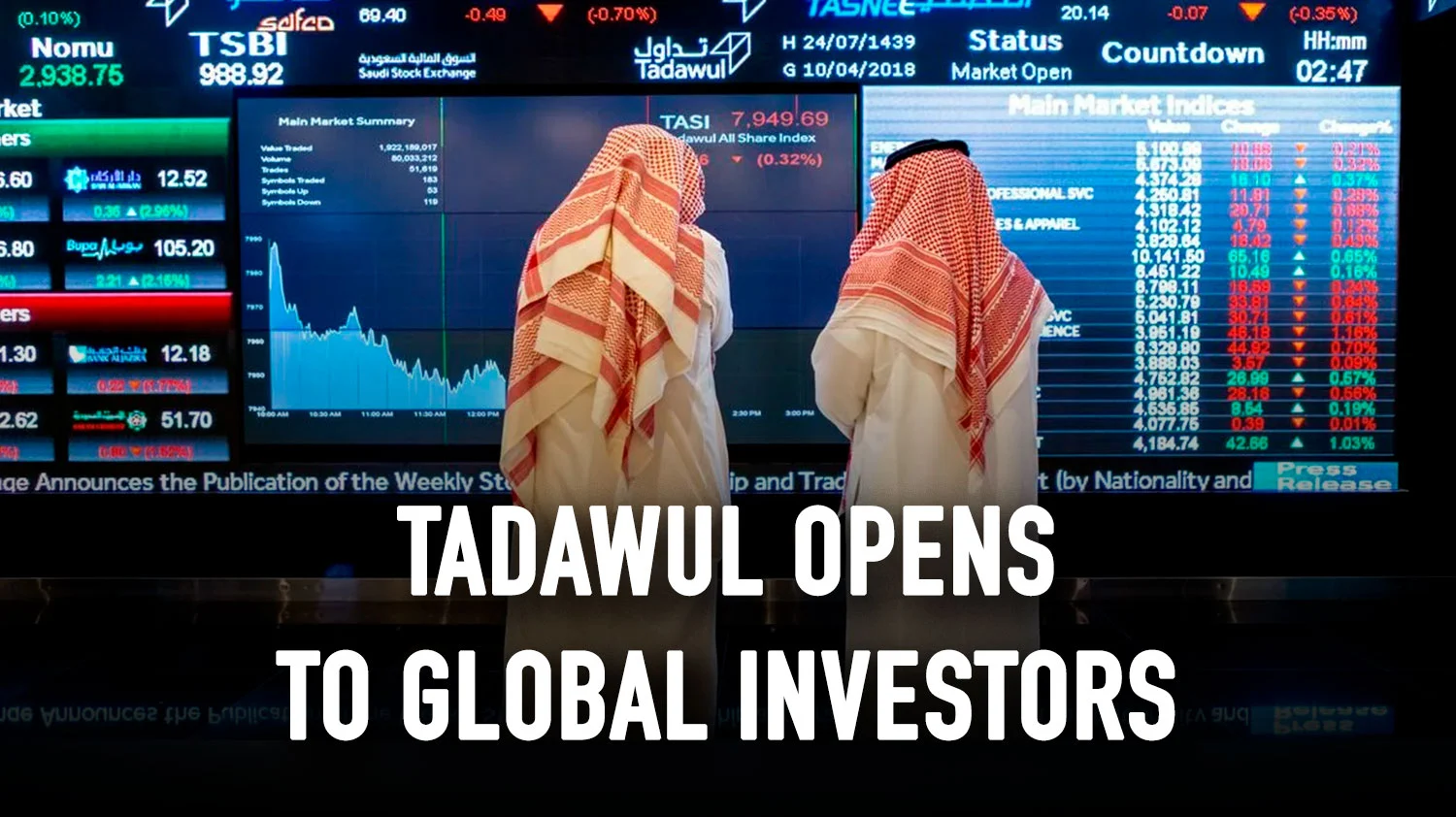
When it comes to finance, the Gulf region has long been perceived – not entirely falsely – primarily as a source of capital. After all, seven of the world’s 15 largest sovereign wealth funds are domiciled in the United Arab Emirates, Kuwait, Qatar, and Saudi Arabia. But Saudi Arabia’s recent decision to open its stock exchange, Tadawul, to all foreign investors – part of the Kingdom’s efforts to redefine itself as an investment destination for institutional capital – marks an important structural shift for the Gulf.
Only 15 years ago, Gulf capital markets were largely closed off, owing to mandatory domestic ownership of majority stakes and sectoral restrictions for foreign investors. That changed when the global financial company MSCI upgraded the UAE and Qatar to emerging-market status in 2013, and Saudi Arabia in 2019, following market-liberalization measures. Each country hoped that, by boosting its domestic exchange, it could become the regional financial center of choice.
The competition for that title has long been intense. Few today know that the Kuwait Stock Exchange was the world’s third-largest market before a Ponzi scheme triggered its collapse in 1982. After that, Bahrain became the region’s financial center, owing to its advanced banking and investment regime. Later, in 2004, the creation of the Dubai International Financial Center, a special economic zone, shifted attention and assets to the emirate.
Until the mid-2000s, most asset markets in the region were largely unregulated, particularly in terms of governance. This lack of oversight contributed to further meltdowns following the Kuwait debacle. The Saudi stock-market crash of 2006 wiped out the savings of many unsophisticated retail investors, leading the Kingdom’s Capital Market Authority (CMA), officially established in 2003, to adopt more stringent governance measures.

Despite being a late bloomer, the Tadawul is now the largest stock exchange in the Gulf Cooperation Council. Today, the regional tussle for financial sector dominance is between Saudi Arabia and the United Arab Emirates. In a bid to gain the upper hand, the CMA consulted with market participants last October about the possibility of relaxing further the exchange’s restrictions on foreign investment.
While much-anticipated, the reforms announced on January 6 are more limited than those taken in advance of MSCI’s 2019 upgrade. For example, despite eliminating the need for foreign investors to meet qualification requirements, individual foreign investors still cannot own more than 10% of any stock. Moreover, the $10 billion in additional investment expected from this change is not material for a market valued at $2.7 trillion, which already has more than $150 billion in existing foreign capital.
Still, this announcement represents a tipping point in the liberalization of an exchange that has been growing at a rapid pace. Over the past three years, the Tadawul has debuted more than one hundred IPOs, making it a rare bright spot in regional and global listings. This trend is set to accelerate, as Saudi family offices increasingly list their holdings, and fiscal consolidation forces the government to dispose of non-critical assets.
All this activity, as well as the expected dual listings by foreign companies, is predicated not only on the exchange’s robustness, but also on the quality of its corporate governance requirements. Unlike the comply-or-explain approach adopted by many European peers, the CMA’s regulatory framework relies predominantly on mandatory rules. Among its few voluntary guidelines, however, are important provisions – such as those concerning the establishment of an investor-relations function – which many Saudi companies use only for communicating financial information.
Now that foreign investors can more easily access the Tadawul, they will scrutinize the market’s corporate-governance rules and companies’ disclosure even more closely. They have already started to vote on board diversity, approval of related-party transactions, and other issues. At the same time, despite their more consequential role in the market, local institutional investors have mostly stayed on the sidelines in these discussions.
Sustained improvement in the quality of governance disclosure will require the regulator to engage in meaningful dialogue with investors, board members, and senior executives over the course of this year. Only with a better understanding of the areas where more accountability is needed, and how this can be reconciled with local customs, can the CMA balance the expectations of local and foreign investors, while ensuring that companies of all sizes can abide by the regime.
Some of this balancing, such as the removal of the rule requiring Audit Committees to be appointed by shareholders, has already been done. Other provisions – including those related to investor relations function and executive pay transparency – merit review. To date, transparency concerning executive pay in Saudi Arabia remains limited, even though board compensation is subject to detailed public disclosure and scrutiny.
Creating a regulatory regime that keeps pace with market development requires small adjustments rather than a major overhaul. To meet this challenge, both the supply of governance information and the demand for it need to be stimulated, the latter through a national stewardship code. Now that the Tadawul is even more open to global investors, ensuring that investment circulates fluidly and safely has become imperative. Just as roads and streets need traffic lights, proper corporate governance will benefit all.
Copyright: Project Syndicate, 2026. www.project-syndicate.org



Все комментарии проходят предварительную модерацию редакцией и появляются не сразу.