

The Birth of European Nuclear Deterrence
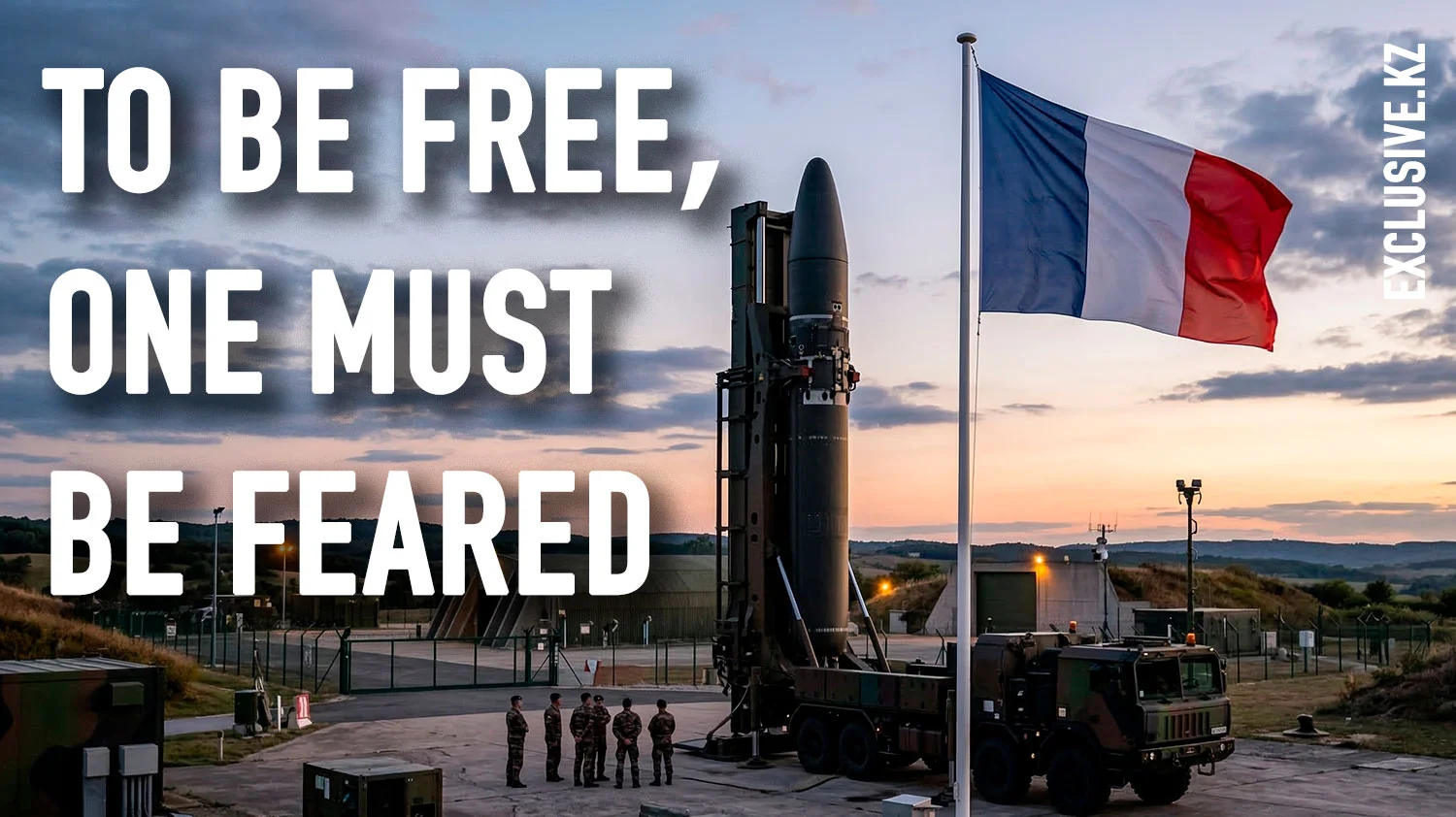
French President Emmanuel Macron has just delivered what may prove to be the most consequential European security speech since the Cold War’s end. Drawing lessons from the long cycle of conflicts that began four years ago in Ukraine, Macron announced sweeping changes to France’s nuclear doctrine and unveiled a new framework for nuclear cooperation with key European allies.
- French President Emmanuel Macron announced a new framework for European nuclear cooperation and a doctrine of “forward deterrence.”
- France will extend its nuclear umbrella to a large portion of Europe, with partners providing conventional capabilities, intelligence, surveillance, and early warning instead of nuclear forces.
- Partners named include the United Kingdom, Germany, Poland, the Netherlands, Belgium, Greece, Sweden, and Denmark; Norway said it was ready to discuss joining.
- Norway’s foreign minister indicated readiness to discuss joining the framework the day after the announcement.
- France would retain full sovereign control over its nuclear arsenal and launch authority, and could deploy strategic bombers on allied territory.
- France’s total warhead stockpike is expected to rise from about 300 by 50–100, to 350–400, to equip two new Rafale squadrons at Luxeuil, operational by 2032.
- The framework aims to deter threats at Europe’s borders (e.g., Baltic states and Suwałki corridor) and create an “archipelago of force” across the continent.
“To be free, one must be feared.” With that striking maxim, Macron laid out a vision he calls “forward deterrence,” which would redraw Europe’s strategic map. France’s nuclear umbrella, long confined in doctrine to the defense of strictly national interests, will now extend across a significant portion of the European continent.
The diagnosis driving this shift is stark. Europe faces a convergence of threats at its borders, compounded by what Macron diplomatically described as “a rearrangement of American priorities and a strong incentive for Europe to take more direct responsibility for its own security.” At the same time, Macron emphasized that the new doctrine is not directed against the United States; rather, it complements the US strategic pivot toward the Indo-Pacific.
Macron warned that Europe’s own strategic terrain has evolved in dangerous ways. “We are witnessing both an increased risk that conflicts will cross the nuclear threshold,” he observed, “and at the same time an intensification of conflict below that threshold.” This proliferation of sub-nuclear confrontation, Macron argues, makes nuclear escalation more likely. “Have we not seen in recent months salvos of missiles striking nuclear-armed powers or nuclear-possessing states? Europe could one day find itself in a similar position.”

Macron’s new doctrine rests on a core idea: nuclear and conventional forces are deeply interdependent and serve the same mission – to dissuade any adversary from using force against France’s vital interests. “To be strong in our nuclear deterrence, we must be strong in our conventional capabilities across all their dimensions.” This is the meaning of the “épaulement” (“shouldering”) that European allies are now expected to provide so that French deterrence can credibly extend to the continent.
“Forward deterrence” recognizes that nuclear weapons cannot defend every square meter of allied territory. There are spaces – geographically, politically, strategically – where the use of atomic weapons is simply not credible. Under France’s traditional “anti-cities” doctrine, the ultimate threat is a retaliatory strike against an adversary’s population centers. But what happens when a hostile actor operates in a zone where nuclear retaliation would be disproportionate or self-defeating?
The Cold War offers a textbook illustration. West Berlin, enclosed within East German territory, could not be defended with nuclear weapons without destroying it. The solution was to flood the city with NATO soldiers, making any Soviet attack an automatic trigger for full-scale war. This was President John F. Kennedy’s “build-up” in response to the 1961 Berlin crisis (East Germany’s own response was to construct the Berlin Wall).
In 2026, Europe’s vulnerable seams run along the Baltic States and the Suwałki corridor between Poland and Lithuania, which borders the Russian exclave of Kaliningrad. Defending these spaces requires robust conventional forces capable of deterring aggression in areas where use of nuclear weapons is implausible.
Under the new framework, France would retain full sovereign control over its nuclear arsenal and launch authority and be able to deploy strategic bombers on the territory of European allies. “Our interests, while they encompass metropolitan and overseas France, cannot be reduced to the mere outline of our national borders,” according to Macron.
The countries named as partners include the United Kingdom, Germany, Poland, the Netherlands, Belgium, Greece, Sweden, and Denmark. Norway’s foreign minister declared the very next day that his country was “ready to discuss” joining the framework.
The bargain is straightforward: France extends its nuclear protection, “providing for the deployment, under certain circumstances, of elements of strategic forces on allied soil.” In return, its partners “shoulder” the non-nuclear burden: intelligence, surveillance, nuclear launch detection, and the conventional capabilities essential to defending Europe’s most exposed flanks.
The strategic benefit of dispersing nuclear-capable forces across the continent is twofold. First, it provides European deterrence with strategic depth that a country the size of France simply cannot achieve on its own. Second, what Macron likens to an “archipelago of force” vastly complicates any adversary’s calculus.
Macron also announced an undisclosed increase in the number of warheads, which is expected to rise from an estimated 300 by 50-100 – enough to equip the two new Rafale squadrons assigned to the reactivated strategic air base at Luxeuil, set to become operational in 2032.
Reactions to Macron’s announcement from European capitals were swift and enthusiastic. German Chancellor Friedrich Merz announced that he and Macron had established “a high-ranking nuclear steering group,” including German participation in French nuclear exercises. Polish Prime Minister Donald Tusk announced that “we are arming up together with our friends so that our enemies will never dare to attack us.”
On the domestic front, the reaction was remarkably benign. Political leaders who usually oppose Macron reflexively – from Jean-Luc Mélenchon on the far left to Marion Maréchal, the granddaughter of Jean-Marie Le Pen, on the far right – found themselves approving.
Macron’s speech marks the beginning of a new strategic era for Europe. France offers its nuclear shield. Its allies provide conventional muscle, intelligence capabilities, and territorial depth to make that shield credible across the continent.
Whether “forward deterrence” will prove as robust in practice as it sounds in theory remains to be seen. The challenges are formidable: sovereignty sensitivities, command-and-control complexities, and the ever-present risk that extended deterrence commitments may be tested by adversaries probing for cracks.
Nevertheless, this is a breakthrough moment. For the first time since the Cold War, Europe is building a nuclear strategy that fully belongs to Europeans. The age of strategic dependence is drawing to a close.
Copyright: Project Syndicate, 2026. www.project-syndicate.org
Cover illustration generated using AI


Все комментарии проходят предварительную модерацию редакцией и появляются не сразу.