

The EU Cannot Afford to Bluff on Ukrainian Membership
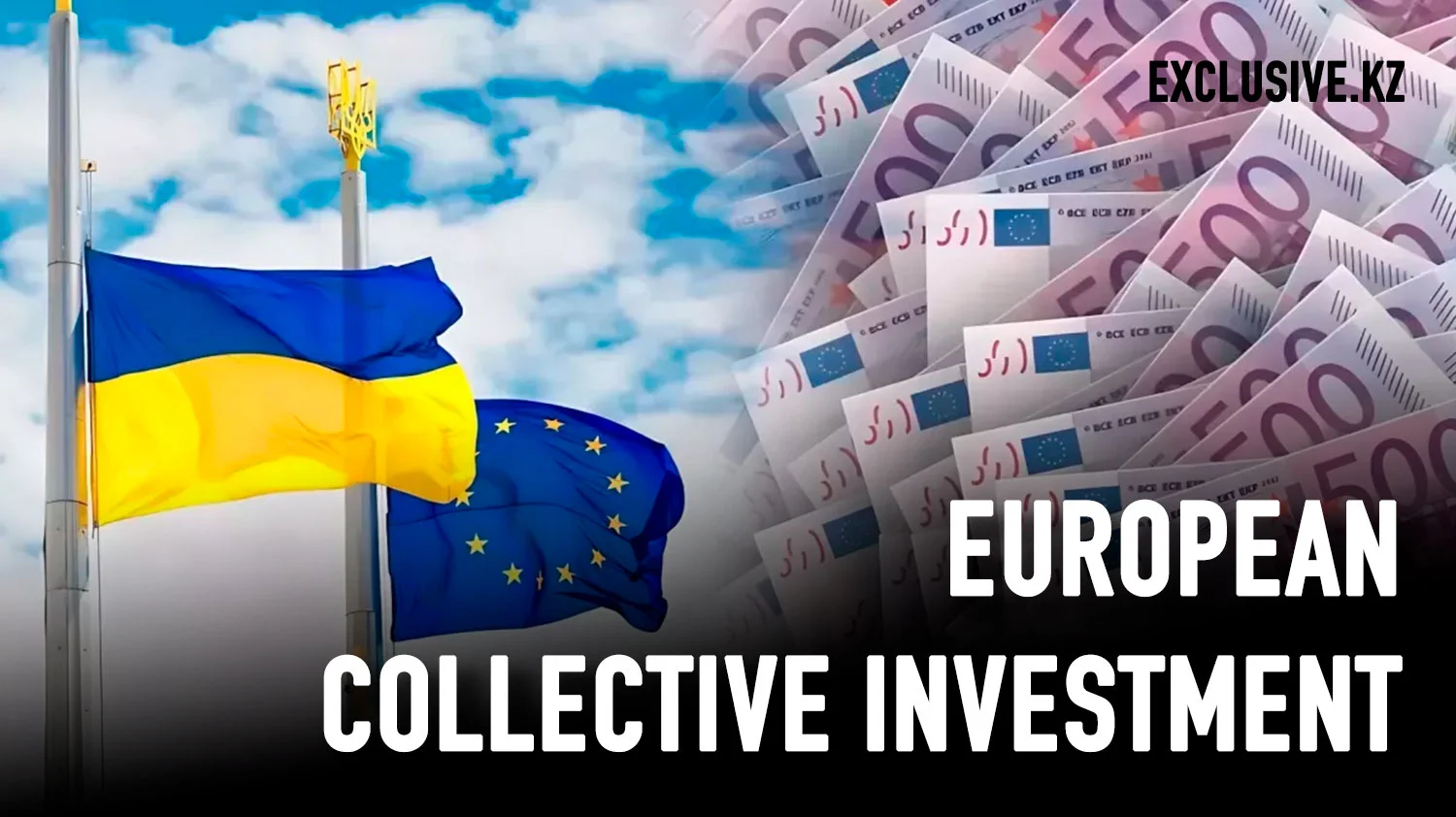
As German Chancellor Friedrich Merz rightly pointed out at this year’s Munich Security Conference, Europe’s fate now lies squarely in its own hands. Business as usual in the European Union will not be nearly enough to meet this challenge.
Indeed, the EU must recognize that, at the heart of its contemporary malaise, is a political-economic asymmetry. This is painfully apparent in the EU’s commitment to welcome Ukraine as a full member. Although Ukraine’s future EU accession promises to bring large long-term benefits, the adjustment costs – across the agriculture sector, labor markets, and public budgets – will be immediate, unevenly distributed, and politically sensitive.
As these costs come into focus, Europe’s strategic commitment is colliding with domestic constraints. As a result, the EU seems hesitant to move forward, even as its leaders insist that Ukrainian membership remains imperative. The biggest problem has been a coordination failure: the accession process requires interdependent political decisions – on ratification, market-opening reforms, and budgetary adaptation – none of which is politically neutral.
EU member-state governments face electoral constraints, fiscal limits, and resistance from domestic constituencies whose ranks have swelled in anticipation of the coming adjustment costs. No government wants to move first without credible assurances that others will absorb comparable costs. Even though a strategic consensus has been established, there have been delays, new conditionality demands, and procedural slow-pedaling, because acting alone is risky.

This dynamic mirrors a familiar problem in economic policymaking. Markets often fail to finance projects that are risky, capital-intensive, and slow to pay off. In these cases, governments must intervene not because such projects lack value, but because private actors cannot bear the uncertainty.
Likewise, EU governments are struggling to take the next step on Ukraine’s accession, not because enlargement lacks strategic value, but because the domestic political risks are front-loaded, while the benefits lie in the future. In other words, Europe is trying to make a high-risk strategic investment without insurance.
The irony is that the EU has already proven capable of addressing similar coordination problems. For example, it recently launched large-scale industrial initiatives to promote batteries, semiconductors, and hydrogen – projects that are seen as strategically necessary, but unfinanceable by private sources.
The EU’s strategy in these fields was to share risk through coordinated public investment, absorbing early losses and synchronizing action across borders. Participation was asymmetric, time-limited, and framed as a form of efficiency-enhancing coordination.
This experience offers a lesson for EU enlargement. If Europe wants to make credible commitments to Ukraine, it must lower the political costs of saying yes. That starts with being honest about what the process entails. Ukraine’s accession would generate real adjustment pressures. Agricultural producers in some member states would face increased competition; labor-intensive sectors would experience wage and employment effects; and budgetary allocations would shift.
Since democratic governments have good reasons to be concerned about these adjustments, acknowledging them is a precondition for credible policymaking. If they are ignored, resistance to Ukrainian accession will show up later in the form of vetoes, demands for additional safeguards, and other delays. The question is not whether enlargement entails costs. It is whether those costs will be absorbed in an unmanaged and politically destabilizing way, as opposed to being shared and smoothed out over time.
One way to cushion the shock is to treat Ukraine’s accession as a collective investment backed by temporary, targeted risk-sharing structures. EU-level adjustment mechanisms – modeled loosely on existing industrial-policy tools – could help governments manage sectoral shocks and budgetary strains during the transition.
Member states would, of course, remain the primary contributors, with their level of participation reflecting their exposure and fiscal capacity. EU institutions would coordinate, and public development banks would spread the costs over time through loans and guarantees. Such an approach should not rely exclusively on public budgets.
Ukraine’s accession would also create winners and losers within each member state. Many export-oriented firms, logistics providers, construction companies, and financial institutions will be well-positioned to benefit from Ukraine’s reconstruction and deeper integration. Mobilizing these beneficiaries through co-financing and investment vehicles would broaden political coalitions and make enlargement easier to defend domestically.
Crucially, all support would be time-limited, capped, and tied to clear accession milestones. The objective is not to provide permanent compensation, but to ensure political feasibility.
The same logic also favors a more integrated approach to Ukraine’s postwar reconstruction. Treating reconstruction and enlargement as separate tracks makes both more fragile. Coordinated investments in defense-industrial capacity, agricultural modernization, energy systems, and infrastructure could generate long-term benefits for both Ukraine and current member states, turning enlargement from a redistribution problem into a joint system-building project.
Phased or “light” enlargement can help manage the adjustment, but it also carries risks. If intermediate stages become substitutes for steps toward membership, the EU’s credibility will suffer. For Ukraine, what matters most is a clear commitment that meeting the criteria will lead to full membership.
But credibility is not only a matter of intent; it is also a matter of capacity. If promises cannot be sustained politically, they will eventually be broken, and the fallout will be strategically damaging. Without mechanisms to manage adjustment costs, the EU risks drifting into ambiguity, as high-level commitments are paired with indefinite timelines.
For Ukraine, mixed signals will weaken reform incentives and complicate reconstruction. For Europe, they will undermine deterrence. Europe’s choice is not whether to bear the costs of Ukraine’s accession, but whether to bear them deliberately through institutions that make commitment sustainable. Otherwise, Europe’s credibility will be eroded from within.
Ukraine’s accession is about much more than Ukraine. It is about whether the EU can adapt its enlargement model to a world where geopolitics and economics are tightly intertwined. A union that has learned to shape markets at home cannot rely on market forces alone when integrating a country as large and strategically important as Ukraine.
Credibility in this context will not be built on declarations, but on institutions and policies that make commitments believable. When it comes to Ukraine’s accession, Europe cannot afford to bluff, because its own future increasingly depends on it.
Copyright: Project Syndicate, 2026. www.project-syndicate.org



Все комментарии проходят предварительную модерацию редакцией и появляются не сразу.