

Trump deserved a Nobel War Prize
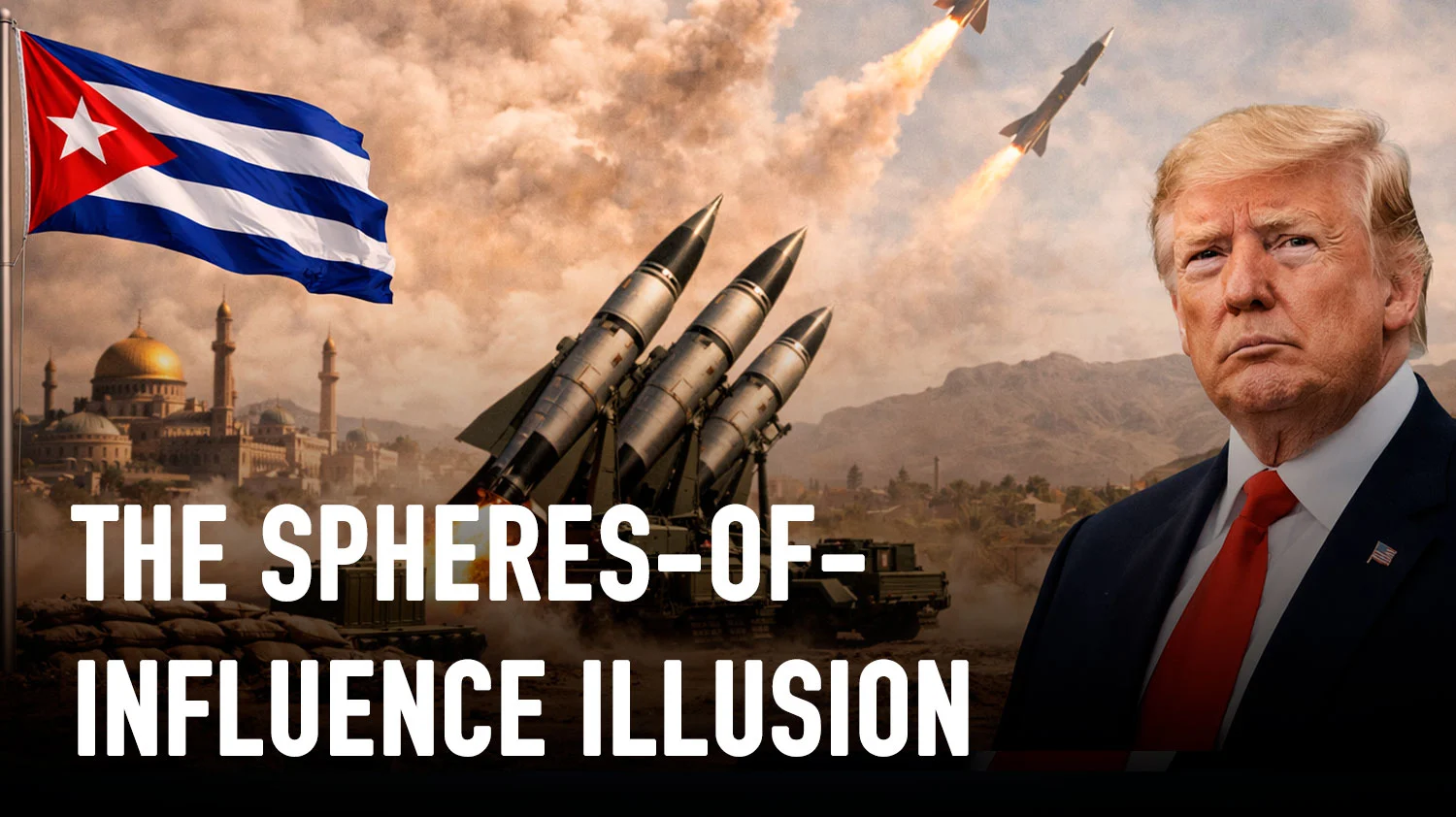
The third Gulf War, as well as the prospect of US intervention in Cuba, are on the verge of turning an unlikely candidate for the Nobel Peace Prize into an ideal candidate for the Nobel War Prize. US President Donald Trump, who credits himself for ending eight wars, has been engaged in nine military operations during his second term, the most important being the one now taking place in Iran.
- The article discusses a potential Nobel Prize in War for US President Donald Trump, citing the third Gulf War and possible US intervention in Cuba as factors.
- It states Trump credits himself for ending eight wars and that he has been engaged in nine military operations during his second term, with the most important being the war now taking place in Iran.
- It describes the re-emergence of spheres of influence, with Russia's invasion of Ukraine, China's efforts to assert regional dominance in Asia, and US interventions in Latin America and designs on Greenland.
- It traces the historical concept of spheres of influence from the 15th-century Treaty of Tordesillas to the 1884-85 Berlin Conference, and notes Carl Schmitt's development of the idea in the late 1930s.
- The Korean War example is cited: the US dispatching the Seventh Fleet to the Formosa Strait after North Korea's 1950 invasion, with Mao Zedong's initial hesitation due to Taiwan concerns and Kissinger's observation about the paradox of hegemony.
- It mentions Marco Rubio's Munich Security Conference speech opposing liberal internationalism and describes Rubio pulling out of a Ukraine high-level meeting to support Viktor Orbán in Budapest.
All this confirms not only the extraordinary volatility of the international context but also the total unpredictability of the American president. In this context, it remains difficult to analyze the international system in a rational way. Still, one idea seems to link the disparate events that have defined the breakdown of the postwar and post-Cold War international order in recent years: that whatever new order emerges will be built around spheres of influence.
The dominant organizing principle of international relations before World War II has indeed returned to the forefront of global politics in recent years. Russia’s invasion of Ukraine, China’s efforts to assert dominance over Asia, and the United States’ interventions in Latin America and designs on Greenland all point to the re-emergence of great-power competition for regional primacy. But while the spheres-of-influence model sheds light on the geopolitical ambitions shaping Chinese, Russian, and US policies, it is neither a viable nor a desirable means of producing stable global order.
Spheres and Blocs
The sphere is a model of international relations with ancient historical roots. The Greek idea of ecumene and the Roman limes represented early attempts to define the limits of imperial authority. In the 15th century, the Treaty of Tordesillas took this idea one step further by dividing the newly discovered (by the West) part of the world between Spain and Portugal, and was done so with the pope’s blessing. European powers later formalized the concept at the Otto von Bismarck-hosted Berlin Conference of 1884-85, employing the German term Interessensphäre as they carved up Africa among themselves.

At its core, a sphere of influence presupposes the existence of a hegemonic power exercising varying degrees of authority over subordinate actors within a defined area through suzerainty, protectorate arrangements, or outright domination. The German legal philosopher and Nazi supporter Carl Schmitt gave the idea a sharper political dimension in the late 1930s, transforming it from a descriptive concept into a strategic doctrine.
This vision found its clearest expression during the Cold War, when geographic boundaries and political alignments coalesced into rigid blocs. The Korean War offers a striking example: because the United States had not included South Korea within its formal security perimeter, Soviet dictator Joseph Stalin believed North Korea could take the risk of invading the South.
Chinese leader Mao Zedong, who would ultimately intervene on North Korea’s behalf, was initially hesitant. He feared that an invasion of South Korea might prompt the US to extend its security commitments to Taiwan, thereby making the island’s separation from China permanent. Mao’s concerns proved justified. After North Korea launched its attack, US President Harry Truman dispatched the Seventh Fleet to the Formosa Strait, reversing his administration’s policy of not intervening in either Korea or Taiwan. Had North Korea not launched its invasion in 1950, Taiwan’s current status might look very different.
Former US Secretary of State Henry Kissinger highlighted the connection between Taiwan and South Korea in his 2011 book On China. Once the US publicly committed to defending South Korea, he argued, “it could not allow the fall of Taiwan without destroying its entire Asian security architecture.” As Kissinger put it, this dynamic reflects the “paradox of hegemony,” whereby “peripheral commitments become central through their interconnection.”
The lesson is clear: rather than stabilizing international politics, spheres of influence often create new sources of instability. By tying peripheral territories to the credibility and security interests of great powers, they risk turning local crises into major international conflicts.
The New Politics of Dominance
The re-emergence of the spheres-of-influence model reflects a period of hegemonic transition. With no single power willing or able to dominate the global order and assume the responsibilities that come with that role, major powers are increasingly compelled to secure their own regions in order to manage relations with rivals from a position of strength.
No political leader has embraced this approach more openly than Trump. An intransigent nationalist, he has sought to consolidate US primacy over the Western Hemisphere, from Greenland to Tierra del Fuego. But as his decision to launch a war against Iran has made abundantly clear, Trump’s ambitions extend far beyond the Americas.
Europe, unsurprisingly, has found itself in Trump’s crosshairs. European countries challenge America’s technological dominance while championing the liberal values his MAGA movement despises most. In Trump’s view, that makes Europe a target, not a competitor, and certainly not an equal. But unlike his predecessors, Trump seeks hegemony without providing the robust security guarantees that have defined US leadership since World War II, and his administration’s open support for Europe’s anti-liberal forces has cast doubt on America’s reliability as an ally.
US Secretary of State Marco Rubio’s speech at February’s Munich Security Conference underscored this shift. While reassuring allies that the US and Europe “belong together,” he dismissed the post-Cold War vision of liberal internationalism as a “dangerous delusion.” The belief that history had ended, that liberal democracy would inevitably spread, and that trade and global rules could replace national interests and borders, Rubio said, was a “foolish idea that ignored both human nature and the lessons of over 5,000 years of recorded human history.”
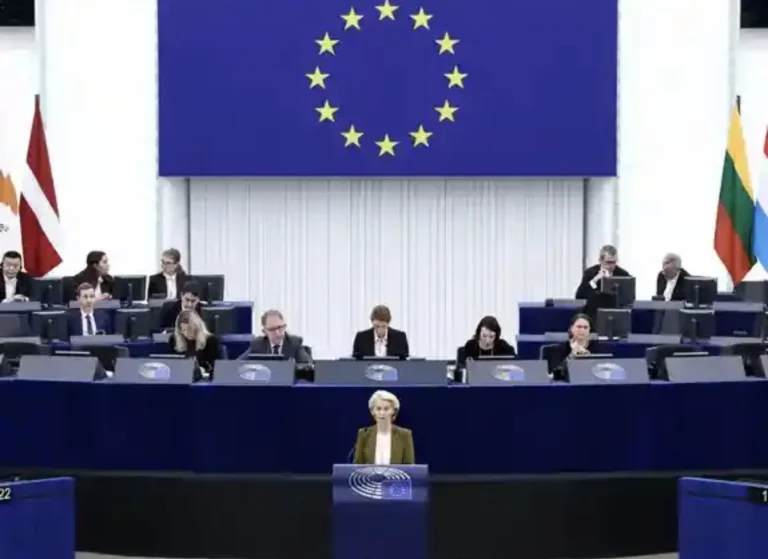
Despite this, European Commission President Ursula von der Leyen said she was “very much reassured” by Rubio’s remarks, revealing how readily some European policymakers still seize on any hint of continued US commitment. But while Rubio’s speech was less confrontational than Vice President JD Vance’s remarks in Munich last year, it adhered to MAGA orthodoxy, taking aim at the liberal values that underpin the European project.
Rubio’s itinerary was equally telling. Instead of attending a planned high-level meeting on Ukraine with a dozen European leaders, he abruptly pulled out and traveled to Budapest to show support for Hungarian Prime Minister Viktor Orbán ahead of the country’s parliamentary elections.
Then there is China. As its willingness to push back against Trump’s tariffs has shown, the People’s Republic increasingly sees itself as operating on near-equal footing with the US. With each possessing significant leverage over the other, the possibility of a strategic accommodation has begun to gain traction in both countries. Consequently, Trump has moved away from the technological containment strategy pursued by his predecessor, Joe Biden, in favor of a more cooperative approach.
American tech executives have helped drive this shift, warning Trump that Biden’s approach would only strengthen China’s determination to catch up with – and ultimately overtake – the US. Nvidia CEO Jensen Huang has arguably been the single most influential voice pushing to relax US export controls, making the simple yet effective case that, rather than holding China back, such restrictions would accelerate its efforts to develop domestic alternatives.
Russia presents a different problem. Although economically far weaker than the US, it remains a major nuclear power, a reality that has profoundly shaped America’s approach to the war in Ukraine. When Ukrainian forces launched counteroffensives in the Kherson region in 2023, for example, Russian President Vladimir Putin repeatedly raised the prospect of nuclear escalation. The Biden administration took these warnings seriously, even slowing the delivery of some offensive weapons to Ukraine. Providing Ukraine with long-range weapons capable of striking deep inside Russia, the thinking went, would prompt Putin to treat such attacks as a direct NATO assault on Russian territory.
Yet Putin’s saber-rattling rang hollow, given China’s firm resistance to nuclear escalation. In numerous discussions with Chinese officials in which I participated alongside the European Union’s then-High Representative Josep Borrell between 2022 and 2024, it became clear that China remained deeply committed to the principle of non-first use. As Bob Woodward notes in his 2024 book War, Chinese President Xi Jinping’s interventions were a “decisive factor” in discouraging Putin from taking the nuclear path.
Seeking to avoid direct confrontation, the US, China, and Russia are again turning to spheres of influence. Amid escalating tensions, the concept seemingly offers a way to manage geopolitical competition while reducing the risk of an all-out great-power conflict.
The Return of Raw Power
The return of spheres-of-influence thinking also reflects a profound political shift. For the first time since 1945, three major powers – the US, China, and Russia – are converging around an authoritarian, Schmittian conception of sovereignty and power.
For Schmitt, sovereignty was not grounded in universal rules. As he famously put it, the world is not a “universum” but a “pluriversum.” Although Trump has almost certainly never heard of Schmitt, his foreign policy embodies several Schmittian principles: skepticism toward liberal values, preference for bilateral power relations over multilateral rules, a clear distinction between friends and foes, and the primacy of decisive action over deliberation by courts and parliaments.
In this sense, Trump has mounted the most persistent Schmittian challenge to liberal internationalism since the end of the Cold War. In his speeches, statements, and social-media posts, he rarely mentions multilateralism or international law, and when he does, it is usually to mock or dismiss them. Instead, his rhetoric echoes Schmitt’s argument that the sovereign is the one who “decides on the state of exception.” In other words, the ruler sets the rules. Accusations of violating another state’s sovereignty carry little weight, because sovereignty belongs to whoever has the power to assert it, regardless of international law.
Trump’s territorial ambitions reflect this philosophy. When he says the US should take control of Greenland, he does not attempt to cloak expansionism in universal values like democracy and freedom, as former President George W. Bush did before the US invasion of Iraq. Trump simply says that the US “needs” Greenland on national-security grounds.
Putin, by contrast, has relied heavily on historical and cultural arguments to justify his invasion of Ukraine and deny its right to sovereignty. China, for its part, has invoked similar historical narratives to support its claims in regions like the South China Sea while stopping short of denying the principle of state sovereignty outright.
Despite their increasingly post-Westphalian territorial ambitions, these powers remain fiercely protective of their own sovereignty. Trump has made border security the centerpiece of his political agenda, and Putin treats any challenge to Russian sovereignty as a direct threat to his authoritarian rule. China follows a similar playbook, pursuing an expansionist agenda while demanding that its own territorial integrity be respected.
All this points to an emerging strategic convergence, with each power seeking to consolidate its own sphere of dominance while tolerating the others’ ambitions to consolidate theirs. The underlying logic is simple and transactional: Ukraine is yours, Greenland is mine, Taiwan is theirs. What binds these regimes together is not ideology but a shared rejection of the constraints the postwar liberal order once placed on the exercise of raw power. Force becomes the only international law.
Where Does Europe Fit?
No region is more vulnerable to a spheres-of-influence order than Europe, and none depends more heavily on the credibility of US security guarantees. While the Trump administration continues to reassure its allies, it is also promoting a so-called NATO 3.0 in which Europeans assume greater responsibility for their defense.
The US, in short, wants to pay less without relinquishing political control of the transatlantic alliance. Elbridge Colby, the Trump administration’s under secretary of “war” (defense) for policy, made that clear in Munich when he voiced strong opposition to nuclear proliferation among America’s European allies. The message was unmistakable: Europe should do more for its own defense, but the US will ultimately set the terms.
This uncertainty has deepened divisions within Europe. Some leaders now call for a psychological break with American security guarantees, a Gaullist acknowledgment that the US may no longer serve as the continent’s strategic shield. While France is already planning to expand its nuclear arsenal, many other European countries remain reluctant to go that far, preferring to seek an accommodation with Trump or wait and hope for a return to the pre-Trump status quo. The third Gulf War has confirmed the structural strategic weakness of Europe, which is now sidelined in two major conflicts: Ukraine and the Gulf.
Internal disagreements over major defense projects such as the Future Combat Air System, particularly between France and Germany, have further hindered European security cooperation. Moreover, French policymakers worry that a rapid military buildup could dampen Germany’s appetite for deeper defense integration. In his speech in Munich, President Emmanuel Macron echoed these concerns, calling on EU member states to focus on joint projects rather than competing national strategies.
Confronted with China’s economic power, the threat of Russian aggression, and Trump’s unpredictability, Europe finds itself at a crossroads. Increasingly, it looks less like an independent strategic actor than easy prey for great powers.
Europe’s predicament highlights a deeper truth. The spheres-of-influence concept offers a useful lens for understanding the Schmittian logic shaping great-power behavior, but it cannot provide a stable framework for international politics. A new global order may well be emerging, but its final form remains far from settled. What is certain is that it will bear little resemblance to the world of the 19th century.
Copyright: Project Syndicate, 2026. www.project-syndicate.org
Cover illustration generated using AI
Все комментарии проходят предварительную модерацию редакцией и появляются не сразу.