

Trump’s American Titanic
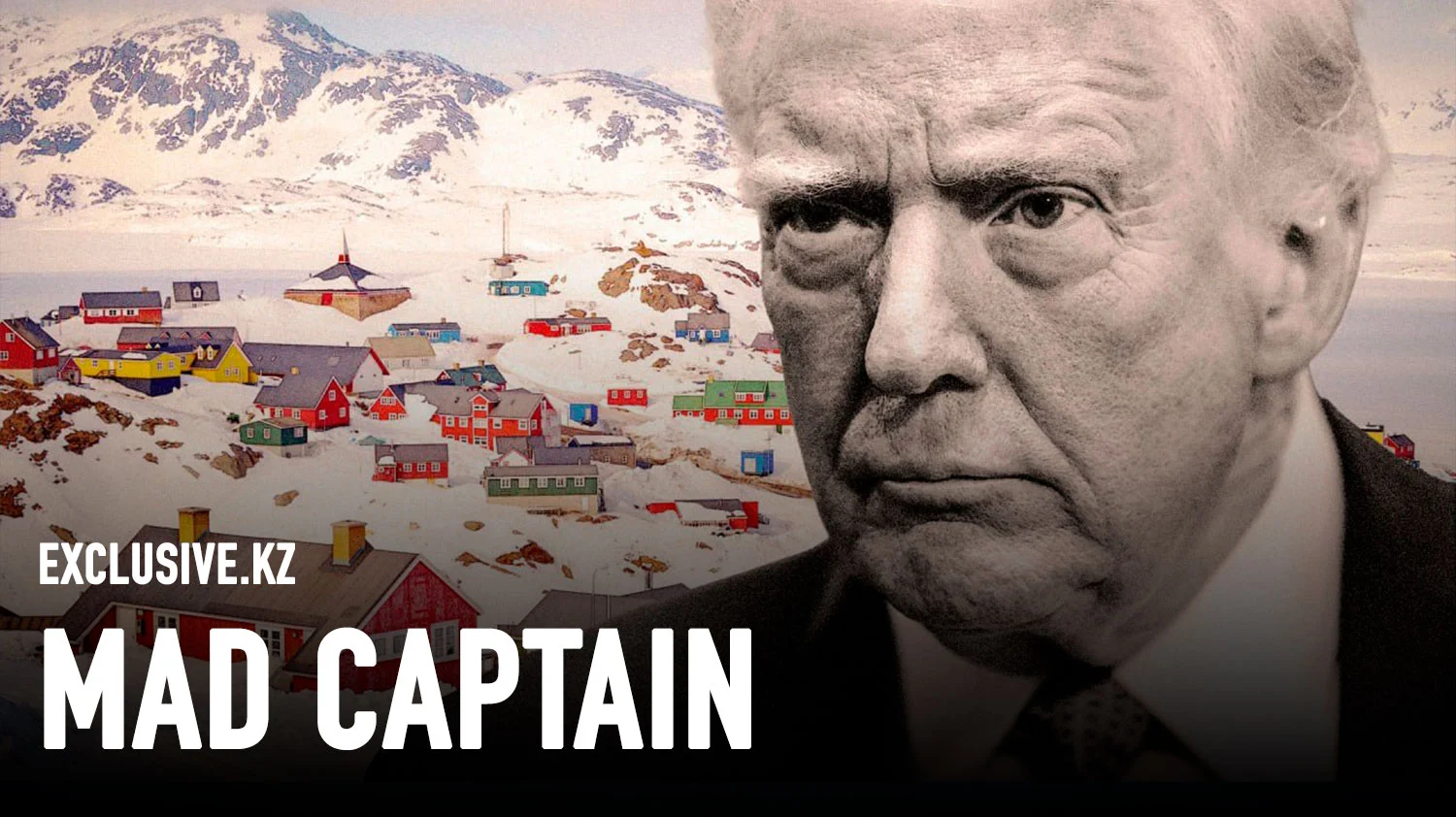
Recent political developments in the United States have revealed a fundamental American weakness. Following President Donald Trump’s threats against Greenland (which he walked back in Davos), US Vice President JD Vance inadvertently conceded a hard truth during an appearance at an industrial shipping facility in Toledo, Ohio. Touting a supposed “great American comeback,” he blamed former President Joe Biden’s administration for a burgeoning affordability crisis and then blurted out, “You don’t turn the Titanic around overnight.”
Of course, the Titanic was never turned around. But if the US is destined to hit a proverbial iceberg and sink, the impending catastrophe would follow from mistaken reasoning and a false interpretation of history.
For Trump and other US tariff-mongers, the key precedents are the 19th century, when America was shielded by high protectionist walls, and the 1930s, in the aftermath of the Great Depression. The lesson they take from these periods is that countries with a large market can use access to it to extract concessions from their trading partners. Such is Trump’s instinct when he makes wild threats of 200% tariffs on French wines, or 100% tariffs on all Canadian goods.
But this extractive reasoning breaks down when critical strategic goods – think semiconductors, rare earths, and hydrocarbons – are concerned. The geoeconomic conflicts of the 2020s are largely about supply problems, which are not best handled by putting higher taxes on imports. A 100% tariff on goods from Canada would indeed hurt Canadian producers, but it would also have a devastating impact on Michigan and Illinois, whose industries need Canadian components and parts.

Trump views tariffs not only through a trade-policy lens but also through a highly political and emotional one. He is driven by his domestic audience and his own psychological demons to issue a continuous stream of insults, and this makes bargaining a disaster, because the basis for any possible deal is always undercut.
Consider Trump’s most obvious and embarrassing defeat so far. A bipartisan consensus had designated the challenge posed by China as America’s primary foreign-policy concern. But Trump lost his tussle with Chinese President Xi Jinping, because he seems not to have realized that China supplies more than just textiles and toys. It is also the main source of commodities such as the rare earths and metals used in electronics, semiconductors, and fusion technology – all rapidly developing, strategically critical industrial sectors.
Could tariff threats still work against other countries or markets? The Trump administration’s recently published National Security Strategy focuses less on the threat from Russia and China than on the ideological challenge emanating from Europe, which is supposedly inviting “civilizational erasure.” With its large bilateral trade surplus vis-à-vis the US, is the European Union vulnerable to a Trumpian tariff campaign?
European industries are certainly desperate for foreign markets, and the rapidity with which the European Commission capitulated to Trump’s 15% tariff regime last year seemed to signal weakness. Europe looked vulnerable because it had no obvious leverage equivalent to China’s rare earths, and because it has grown only more dependent on US liquefied natural gas. Many of Europe’s most visible exports – from German automobiles to French wines and champagne – are consumed only by well-off Americans, not by the typical MAGA voter. Trump administration officials thought they had a strong hand.
But the EU is now asserting itself and exploring its options, which include the Anti-Coercion Instrument – the bloc’s “trade bazooka,” which provides a mechanism for quickly imposing a wide range of tariffs and trade restrictions – and measures affecting intellectual property rights and foreign direct investment. Europeans are also identifying US pressure points.
For example, the most important single export group from the EU is pharmaceutical products, which accounted for around $140 billion in 2024 – or over one-quarter of total EU exports to the US. These include the transformative GLP-1 weight-loss drugs, whose active ingredients are sourced from County Cork, Ireland. Another option is to apply taxes to Europeans’ investments in the US, which would make it more expensive to finance American borrowing, including the debt issued to cover the US federal deficit.
Europeans’ willingness to deploy such harsh measures – and to invest much more in domestic defense and security procurement – has been heightened by the Trump administration’s rhetorical blunders. Trump’s suggestion that European allies have not pulled their weight in NATO engagements (that they were “a little off the front lines” in Afghanistan) rightly provoked outrage. The real figures – 44 Danish soldiers were killed in Afghanistan, as were 457 British, 150 Canadians, and 90 French – soon became a devastating indictment against Trump.
It is Trump and his top advisers’ behavior that has put the US on a Titanic-like course. Globally, they are despised, winning plaudits only from the likes of Russian President Vladimir Putin. As the mad captain fulminates impotently from the bridge, the rest of the world is making an orderly dash for the life rafts that will carry them to dry land together.
Copyright: Project Syndicate, 2026. www.project-syndicate.org



Все комментарии проходят предварительную модерацию редакцией и появляются не сразу.