

Trump’s Shaky Bargains
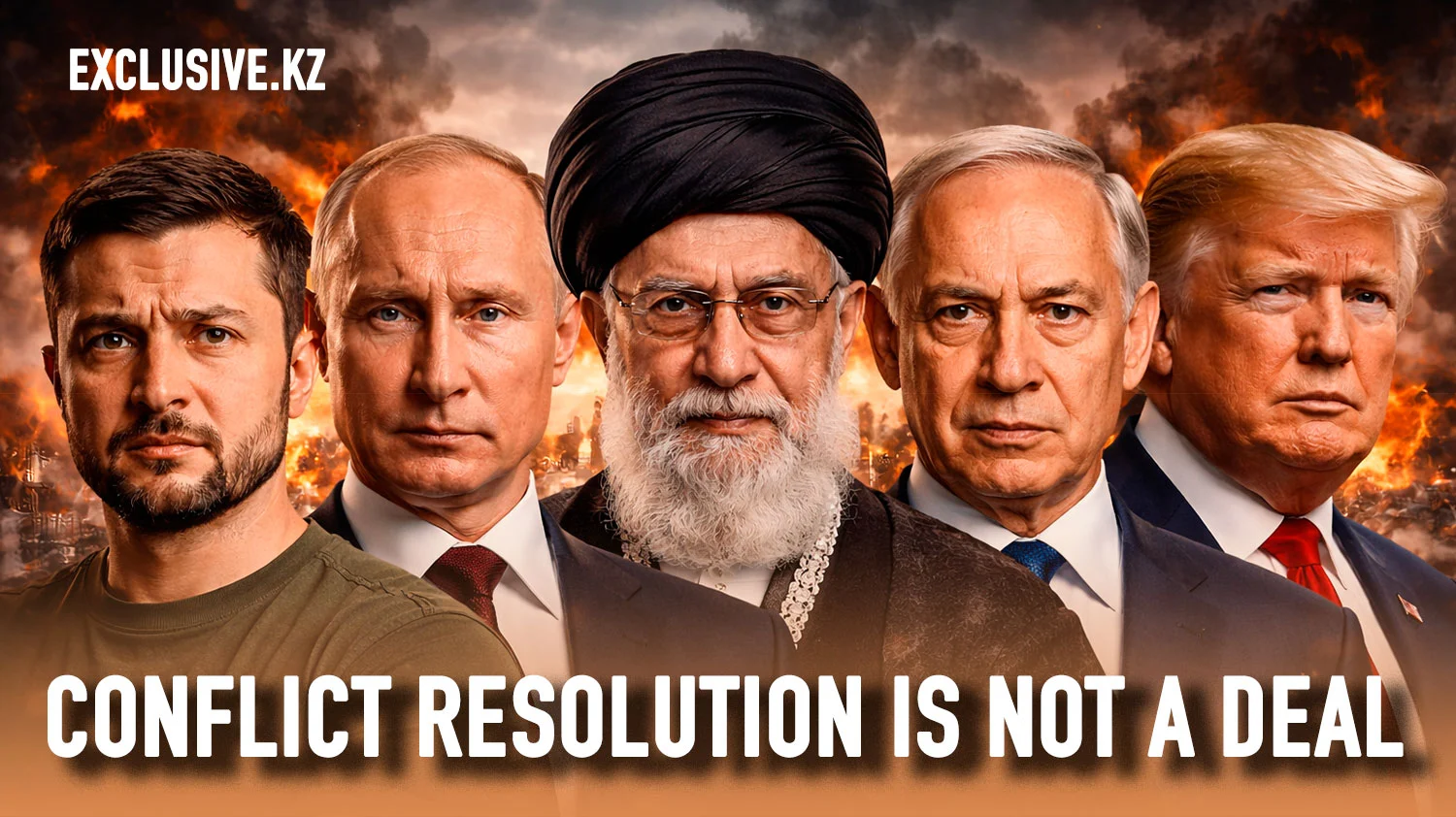
In recent months, the United States has been engaged in negotiations over two distinct but equally charged geopolitical issues: ending Russia’s war against Ukraine and securing guarantees that Iran will never develop nuclear weapons. While the efforts are unrelated, together they highlight the profound shift underway in the conduct of US foreign policy under President Donald Trump. Rather than operating within a rules-based framework that accounts for constraints, power dynamics, and long-term stability, the US has embraced transactionalism – or, more precisely, positional bargaining.
- The United States is negotiating over ending Russia’s war against Ukraine and securing guarantees that Iran will not develop nuclear weapons, in what the article describes as a shift in U.S. foreign policy under President Donald Trump.
- The article characterizes the approach as transactional, positional bargaining focused on narrow bilateral negotiations and leverage, with the goal of quick deals.
- It argues such bargaining is ill-suited to complex diplomatic challenges and aims to build durable frameworks rather than one-off exchanges.
- Steve Witkoff, described as a billionaire real-estate developer and long-time Trump crony, is named as Trump’s appointee for leading sensitive negotiations, with Jared Kushner also mentioned as an outsider envoy.
- The piece states that Europe is excluded from Ukraine talks, and that the Trump administration seeks to control both format and outcome of these negotiations.
- It contends the deals would likely produce only a pause in hostilities, eased sanctions, or a high-profile handshake, not long-term peace or stability, and could increase global volatility.
- The article frames the shift toward positional bargaining as reshaping international behavior and undermining long-standing rules, relationships, and institutions.
Trump has long touted his business background and deal-making capabilities as the key to breaking stalemates and advancing America’s interests. His administration approaches every dispute the same way: with narrow bilateral negotiations and copious use of leverage. The tone is always adversarial, the sum is always zero, and the only measure of success is whether (and how fast) a deal is struck.
This approach might work for real-estate transactions, but it is woefully ill-suited to complex diplomatic challenges. Negotiations like those over Russia’s war against Ukraine and Iran’s purported nuclear ambitions should aim not to settle the terms of a one-off exchange, but to build a framework capable of shaping and managing future developments – one that outlasts its architects, survives political shifts, and constrains future governments’ choices. Such durability is impossible to achieve without accounting for history, alliances, and power structures.
There is little reason to believe that Trump’s appointee for leading sensitive negotiations – special envoy Steve Witkoff, a billionaire real-estate developer, cryptocurrency mogul, and longtime Trump crony – is capable of devising such a framework. But that does not matter to Trump, who insists that only an outsider can break longstanding deadlocks. Unbound by traditional diplomatic mindsets and protocols, someone like Witkoff or Trump’s other favorite “envoy,” his son-in-law Jared Kushner, supposedly can devise novel solutions and act with unprecedented agility.

The implicit claim is that experience is a burden, institutions are a barrier, and unresolved conflicts are simply bargains waiting to be struck. But the Ukraine war is not a narrow tactic, and Russia and Ukraine are not two moguls jockeying for a few extra bucks. This is a clash of political projects: Russia is seeking the imperial glory and regional overlordship that it believes it is owed, and Ukraine is defending its freedom, sovereignty, and democracy. For the parties involved, the stakes could not be higher. Witkoff calls the conflict “silly.”
Trump endorses figures like Witkoff partly because he cannot imagine a scenario in which commercial considerations are not paramount. But he is also sending a message: in this new era, authority is derived not from institutional structures, but from proximity to him. Personalized power is the name of the game, and leverage is how that game is won.
Trump is not interested in the arduous task of reaching a durable equilibrium; he wants to strongarm the weaker party into a quick deal that he can frame as a victory. This is true for Iran, which is now facing a rapid build-up of US air and naval assets near its borders. And it is true for the embattled Ukraine, on which the US has repeatedly tried to impose draconian peace terms, though Trump has been disappointed by Russia’s refusal to accept even a deal that is clearly skewed in its favor.
In Trump’s mind, a European presence in these talks can be only a spoiler, particularly in Ukraine. Not only does he want to avoid having to share credit for any settlement; he knows that his European counterparts will not settle for an arrangement that institutionalizes grave imbalances, instead of delivering stable, long-term solutions. As such, they would demand the kinds of institutional guarantees and credible enforcement that any Witkoff/Kushner-brokered deal would almost certainly lack.
This – even more than Europe’s (very real) capability gaps – explains why the US has sought to exclude the European Union from negotiations over Ukraine, not to mention Iran. The Trump administration is committed to controlling both the format and the outcome. But any agreement will be little more than an expression of dominance. It might lead to a pause in hostilities, an easing of sanctions, or a high-profile handshake, but not long-term peace or stability.
The consequences will extend beyond Ukraine and Iran. When the world’s preeminent power embraces positional bargaining over considered diplomacy, it reshapes behaviors and expectations throughout the international system. Powerful states push boundaries. Weaker states scramble to find leverage of their own. Allies hedge. The shift toward positional bargaining will not cause the global system to collapse, but it will lead to greater volatility, as longstanding rules, relationships, and institutions continue to be eroded.
No matter what Witkoff says, wars are not “silly” disputes awaiting a nimble intermediary acting at the behest of a strongman ruler. Strongarming weaker parties into forfeiting their long-term interests merely redistributes risk – and postpones the reckoning.
Copyright: Project Syndicate, 2026. www.project-syndicate.org
Cover illustration generated using AI


Все комментарии проходят предварительную модерацию редакцией и появляются не сразу.

Слава Богу, наконец мир движется в правильном русле! Хаменеи не существует, ещё пару лет и я уверена такая же или подобная судьба ждёт и Путина! История беспощадна с тиранами и диктаторами, подобными Хаменеи и Путину! Они — мусор истории, ее отбросы! Она просто стирает их как ненужную деталь! Россия проиграла войну Украине, а Иран проиграл США и Израилю! Закономерный итог!