


What’s Wrong With the SAVE America Act?
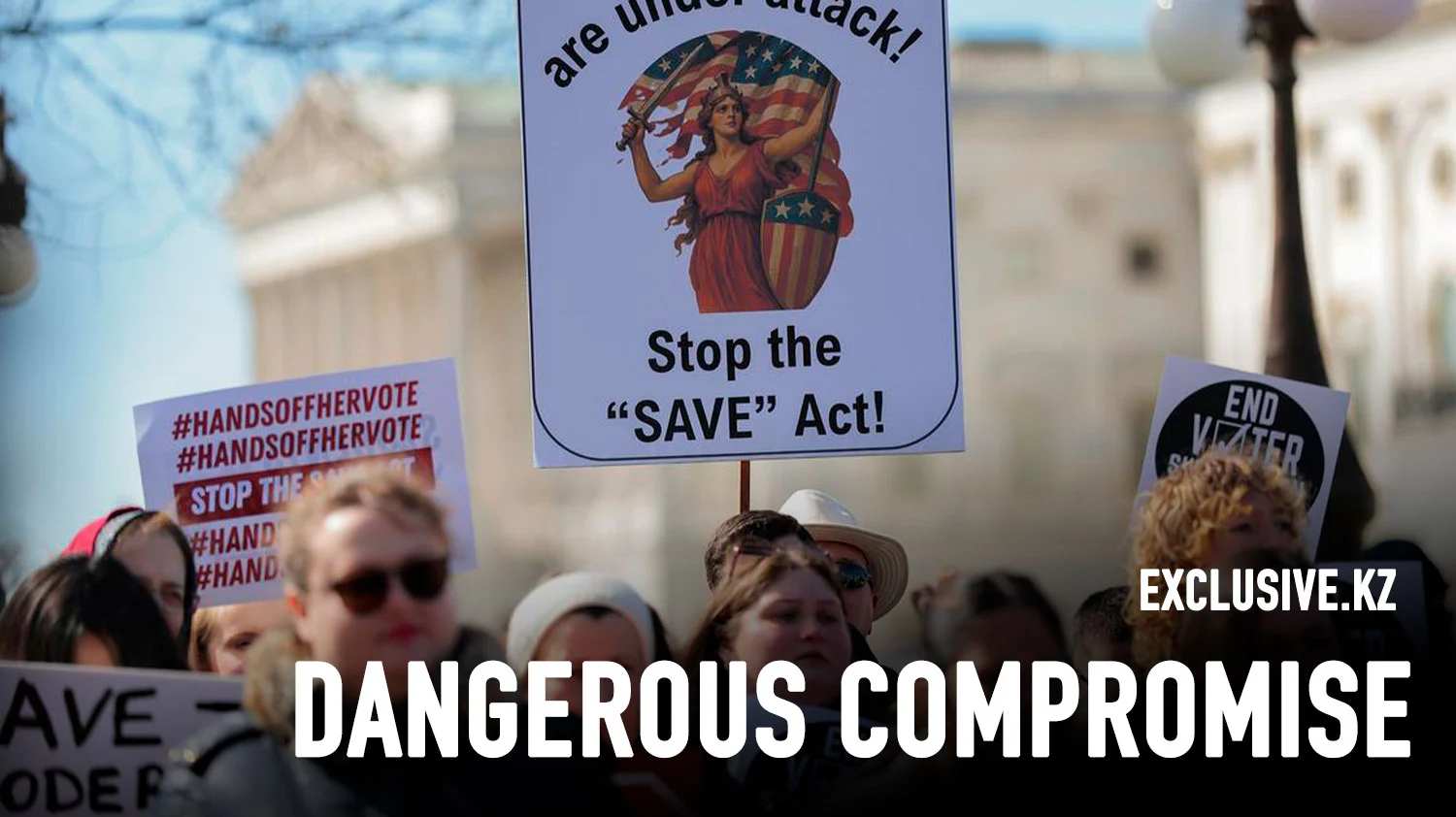
The US Senate has started to debate President Donald Trump’s SAVE (Safeguard American Voter Eligibility) America Act, which would require proof of citizenship in order to register to vote. So far, the discussion has centered on the bill’s partisan electoral implications, but perhaps Americans ought to be asking a more fundamental question: How many citizens are willing to give up their own right to vote to keep a non-citizen from voting?
While the SAVE America Act proposes an additional test of eligibility, the fact is that all tests–no matter how discerning–make mistakes. They can give false positives and false negatives, as scientists know well. Medical tests might indicate a disease when there is none, or no disease in an ill patient. A statistical test might lead a researcher to accept a false hypothesis or reject a true one. Likewise, a government bureaucrat might grant a benefit to an applicant not entitled to it, or deny it to somebody who is. A court might convict the innocent or acquit the guilty.
A different test can reduce the chance of false positives or false negatives, but it cannot eliminate them. More perniciously, a new test cannot reduce both at once. Fewer false positives can only be purchased at the price of more false negatives, and vice versa. Proponents of the SAVE America Act claim that it will lower the likelihood of a false positive: that somebody who is ineligible to vote can do so. But that means it will raise the probability of a false negative: that somebody who is eligible to vote cannot.
Evidence from Kansas suggests that the trade-off is steep. A similar law, passed in 2013, kept 28 Kansas residents from registering illegally and 31,000 Kansans from registering legally. The ratio of false positives to false negatives was about one in a thousand. That should not come as a surprise: registration and voting by non-citizens is exceedingly rare, and the vast preponderance of those seeking to register are US citizens.

Proponents of “restrictive” registration measures–procedures that give greater weight to avoiding false positives than false negatives–often talk of the need to defend the “integrity” of elections. To allow even a single ineligible person to vote, some claim, would fatally undermine the public’s “faith” in the election process. Yet denying dozens, hundreds, or thousands of otherwise eligible voters the right to cast a ballot would surely undermine the public’s faith in elections, not only by cheating those who were disenfranchised, but also by tainting the process with the shadow of bias.
Moreover, the wrongly disenfranchised–those 31,000 Kansans, for example–are US citizens with the same right as other citizens to select their leaders. The assessment of the trade-off, then, must consider the magnitude of the harm on both sides, from false positives and false negatives alike.
How should we think about this trade-off? A half-century ago, many states required that people pass “literacy” tests to vote. In the American South and some other states, these were plainly intended and administered to deny the vote to Black Americans and other racial minorities (until the tests were banned by the 1965 Voting Rights Act).
In the states that adopted them, literacy tests were presented as a safeguard to the integrity of the electoral process–just as proof-of-citizenship requirements are now. Proponents argued that they were necessary to ensure voters’ minimum competency. Even today, many states withdraw the right to vote from people judged by a court to be incompetent to manage their own affairs. But despite periodic concerns that unscrupulous political operatives might “get out the nursing home vote,” this prohibition is rarely monitored and enforced. American society has de facto judged that the injury of allowing an incompetent person to vote does not justify the harm of denying another person the right to vote, whether by neutral application of the law or its manipulation.
In contrast, the US constructs its legal tests to minimize false positives (convicting the innocent) and, correspondingly, to tolerate false negatives (acquitting the guilty). The harm to the individual and society of a false conviction–the forfeiture of an innocent person’s life or liberty–is seen as greater than the harm of a false acquittal. That is why the US Constitution and the country’s laws mandate unanimous verdicts to convict, forbid double jeopardy, and permit appeals of convictions but not acquittals.
The balance of harms to individuals and public institutions in preventing an ineligible person from voting is obviously closer to keeping an incompetent person from voting than to preventing an innocent person from being convicted. The SAVE America Act requires a trade-off greatly disproportionate to the harm it purports to remedy. One non-citizen prevented from voting is not worth a thousand citizens denied their right to vote.
Copyright: Project Syndicate, 2026. www.project-syndicate.org



Все комментарии проходят предварительную модерацию редакцией и появляются не сразу.