

What Trump Gets Wrong About the Cultural Logic Driving Iran
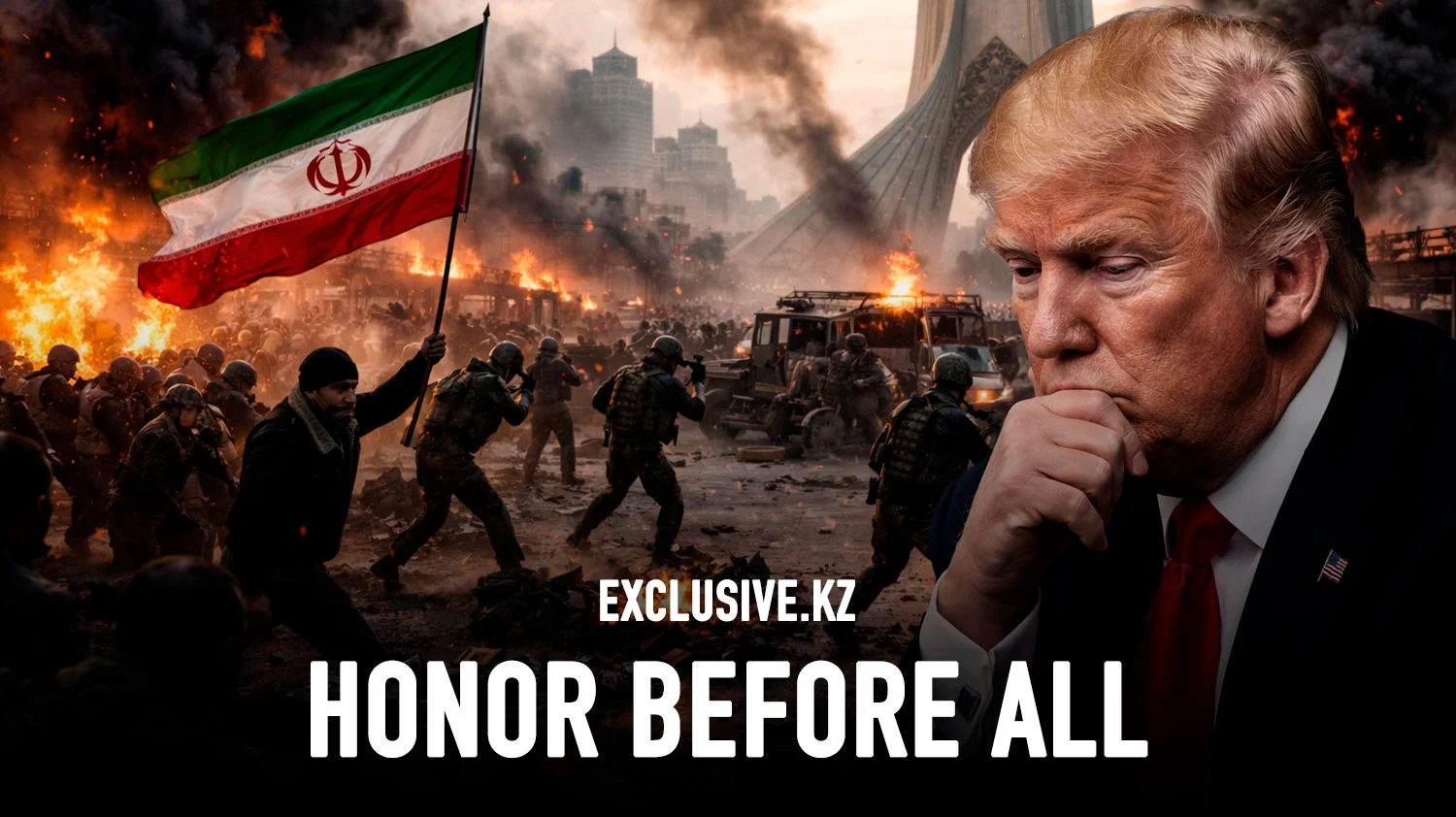
As the Iran war enters its fourth week, much of the debate in the United States is focused on the absence of a clear endgame, the erosion of longstanding alliances, and President Donald Trump’s inconsistent messaging and incoherent diplomacy. Viewing the conflict as a contest over resources and regional power, Trump has relied on sanctions, isolation, and airstrikes to force Iran to yield. For Iran, however, the stakes go beyond material interests.
- The article discusses the Iran war entering its fourth week and critiques President Donald Trump’s sanctions, isolation, and airstrikes as tools to force Iran to yield.
- It argues that Iran’s strategy is influenced by honor-based culture where reputation and deterrence matter, not just material interests, making coercion less effective.
- Deterrence in honor-based societies relies on credibility; even a single concession can undermine it, and standing firm is expected while yielding is costly and shameful.
- Trump’s approach is described as counterproductive because it attacks Iranians’ honor with demands for unconditional surrender and threats to destroy gas fields and power stations.
- The piece asserts that Western observers misread honor-oriented cultures and that negotiation in such contexts favors signaling moral integrity and respect to public reputation.
- It recommends diplomacy that avoids public humbling, including off-ramps and intermediaries, to reduce reputational costs of de-escalation, citing Kennedy’s off-ramp during the 1962 Cuban Missile Crisis and shuttle diplomacy at Camp David in 1978 as examples.
- The article argues the Iran crisis requires a de-escalation path that preserves face for both sides, emphasizing that honor is what Iran cannot afford to lose; it references Project Syndicate, 2026 as the copyright and notes the cover illustration was AI-generated.
American foreign policy has long rested on a simple premise: impose enough economic pain, and adversaries will eventually give in. This approach often works when leaders conclude that their survival depends on compromise. But it fails in societies where, to paraphrase an old Arabic adage, honor matters more than bread. Hunger can be endured; disgrace cannot.
In honor-oriented cultures, conflicts are not fought solely over territory or wealth. Individuals and states alike will bear extraordinary costs to defend their reputation, even at the risk of their own survival. What may seem irrational to outside observers often serves a strategic purpose: signaling that you will fight when you are weaker or escalate when you are losing establishes deterrence.
This logic has deep historical roots. Our research shows that honor-based cultures tend to emerge in environments where institutions are weak and threats are constant. In much of the Middle East, including parts of Iran, pastoral economies and tribal systems made wealth – often in the form of livestock – both valuable and easy to steal. To deter aggressors, tribes developed strict honor codes and a readiness to retaliate swiftly.

When people cannot rely on the state for protection, reputation becomes their primary defense. Deterrence requires credibility: if rivals believe you will retaliate, they are less likely to attack. But credibility is fragile, and even a single concession can undermine it.
Over time, such strategic behaviors harden into moral imperatives. Standing firm is not merely prudent but expected, and yielding under pressure is seen as not just costly but shameful. These norms persist even as conditions change. In Iran, honor remains embedded in social expectations, family structures, religious institutions, and national identity.
Western observers often misinterpret behavior in honor-oriented societies. Our research on negotiation found that the fact-based, instrumental language that tends to work in the US can backfire in Egypt, an honor-oriented society. There, successful agreements depend on signaling moral integrity, respect, and sensitivity to public reputation.
Against this backdrop, Trump’s posture toward Iran is especially counterproductive. In addition to economic and military pressure, he has repeatedly and unnecessarily attacked Iranians’ honor with his demands for “unconditional surrender” and threats to “blow up” the country’s gas fields and “obliterate” its power stations. In honor-based societies, domination and humiliation do not produce compliance; they provoke escalation.
Ironically, Trump is intimately familiar with this dynamic. His political rhetoric is steeped in the language of dominance and retaliation. He is acutely sensitive to perceived slights, quick to counterattack, and guided by a simple rule: never back down, never show weakness. Yet despite being fiercely protective of his own honor, he seems largely oblivious to the fact that others are just as attached to theirs.
Consequently, Trump’s strategy assumes that mounting economic hardship will eventually weaken Iran’s resolve. But in honor-based cultures, coercion raises the reputational stakes. The greater the pressure, the more essential it becomes to stand firm. Defiance is a signal: we will not be humiliated, no matter the cost.
Iran’s defiance, then, does not reflect a failure to respond to incentives. Rather, it reflects a different set of incentives. Iran’s regime deserves no sympathy, but if the US wants to prevail, it must understand the cultural logic driving its leaders’ behavior.
To this end, the US must recognize that leaders in honor-oriented cultures need room to change course without appearing to capitulate. In practice, that means moving away from public ultimatums toward a carefully calibrated diplomatic approach, engaging intermediaries who understand honor dynamics, and creating off-ramps that reduce the reputational costs of de-escalation for both sides.
America’s own experience shows that effective diplomacy often hinges on avoiding public humiliation. During the 1962 Cuban Missile Crisis, for example, President John F. Kennedy quietly provided Soviet leader Nikita Khrushchev with a face-saving off-ramp by privately agreeing to remove American missiles from Turkey. The crisis was resolved not because one side was crushed, but because both found a way to step back without appearing to surrender.
Similarly, at Camp David in 1978, US President Jimmy Carter prevented talks between Egyptian President Anwar Sadat and Israeli Prime Minister Menachem Begin from collapsing by shifting to shuttle diplomacy, carrying proposals back and forth between cabins so that neither leader had to yield publicly. A historic peace followed, with both sides presenting compromise as strength.
The Iran war urgently requires a similar path to de-escalation that allows both sides to save face. In conflicts like these, the question is not how much a country can endure, but what it cannot afford to lose. For Iran, that is honor.
Copyright: Project Syndicate, 2026. www.project-syndicate.org
Cover illustration generated using AI



Все комментарии проходят предварительную модерацию редакцией и появляются не сразу.