

Democracy is built, not imported
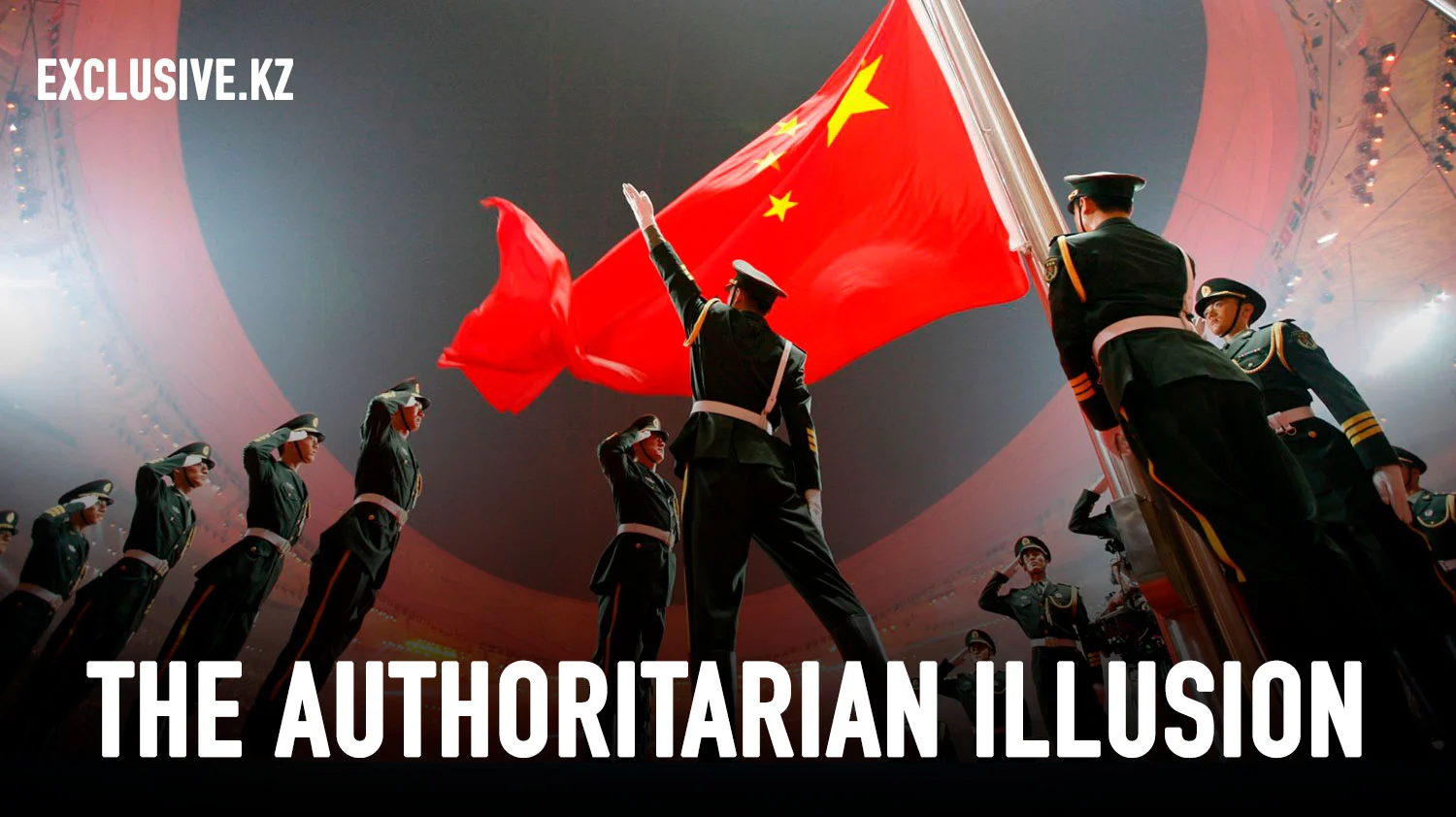
At virtually every historical turning point over the past century and a half, liberal democracy has been declared moribund. That was the case in the 1930s, when supposedly “efficient” fascist regimes proliferated, and in the late 20th century, when state capitalism propelled the success of the “Four Asian Tigers” (Hong Kong, South Korea, Singapore, and Taiwan), and then, most remarkably, China. The same can be said today about the rise of authoritarian leaders who seem capable of quick decisions and forceful action, if not long-term planning as well.
For many people, democracy has become a slow luxury in a fast world – an ideal that is difficult to deliver in a world beset with anxiety, division, and violence. The question is no longer whether democracy is just, but whether it remains useful.
Not since the late Cold War era have so many people lived under autocratic or illiberal regimes. The erosion of democracy has, for the most part, been gradual, proceeding through the weakening of checks and balances, the capture of media and the judiciary, and the manipulation of elections. This legalistic retreat is portrayed as a correction, not a wholesale rejection. But it reflects plummeting confidence in democracy’s ability to deliver security and prosperity.
In a world of instantaneous comparison, every slow or clumsy response from a democratic government is measured against the speed and efficiency of authoritarian execution. Every compromise is contrasted with vertical decision-making. The debate and uncertainty that are intrinsic to democracies can begin to look like weaknesses when viewed alongside the order and continuity promised by authoritarian regimes.

China, where President Xi Jinping has steadily consolidated power, has done the most to advance this authoritarian illusion. The government’s long-term planning, infrastructure investments, and supply-chain dominance in strategic sectors such as rare earths, batteries, and renewables create the impression of an omniscient strategic state that looks far into the future and prioritizes the greater good over particular interests.
But this impression assumes that information is never distorted, that errors are openly acknowledged without political sanction, and that truth always prevails over loyalty. This could not be further from reality. Single-party systems that suppress debate and accountability invariably end up confusing discipline and obedience with intelligence and insight. Authoritarians know how to execute, which creates efficiencies in the short term, but their unwillingness to brook dissent comes with long-term costs.
Dictatorships give the impression of producing fewer inequalities than democracies, when in fact they conceal them. What is portrayed as greater social justice is often nothing more than opacity. Democracies expose societal fractures, whereas authoritarian regimes bury them. The former suffer from telling the truth; the latter survive by making the truth unspeakable.
Likewise, authoritarian regimes can produce technically competent leaders, but those leaders are never fully accountable to society. As a result, their competence eventually becomes arrogance, and then blindness. The absence of popular sanction prevents systemic correction.
Some people explain away these differences as culturally determined, claiming that certain societies are not ready for democracy. But democracy is a social consequence, not a cultural tradition. It emerges when individuals become more mobile, educated, and autonomous. It is produced, not imported.
The structural links between free markets and democracy are more illuminating. The market produces an individual who weighs their options, makes their selection, and often changes their mind. What is true of their purchases applies to political opinions. In the long run, no power can sustainably control a free consumer accustomed to choosing.
Wherever the market advances, closed structures – from the patriarchal family to the clan to the caste – retreat. Even in Confucian societies, individual autonomy begins to surpass filial piety. This shift may be slow, but it is irreversible, transforming attitudes toward authority, upending entrenched social roles, and broadening existential aspirations.
Dictators’ true enemy is the desire for freedom, which is why they highlight democracy’s flaws, amplify its divisions, and present its failure as inevitable. It is also why the United States under President Donald Trump will do everything it can to weaken European leaders, who are more frightening to America’s wannabe dictator than the Russian and Chinese autocrats he often praises.
Democracies will likely experience further setbacks over the next five years, with some societies settling into hybrid regimes combining market mechanisms and prosperity with control and surveillance by mid-century. New and existing technologies will enable these regimes to curb freedom through digital monitoring, algorithms, and predictive analytics.
But these setbacks need not be definitive. An educated, connected, mobile, aging, complex society cannot be governed sustainably through fear. It may submit for a time. It may consent out of exhaustion. But it always ends by demanding choice and responsibility.
Democracy never triumphs once and for all. It returns, in different forms, with different institutions, whenever individual freedom becomes an economic and existential necessity. Even if the path is not linear, and even if violence erupts along the way, it will ultimately prevail, because no other system can sustainably govern free individuals. Democracy is always simultaneously obsolete and ahead of its time.
Copyright: Project Syndicate, 2026. www.project-syndicate.org


Все комментарии проходят предварительную модерацию редакцией и появляются не сразу.