

Getting Ukraine’s House in Order
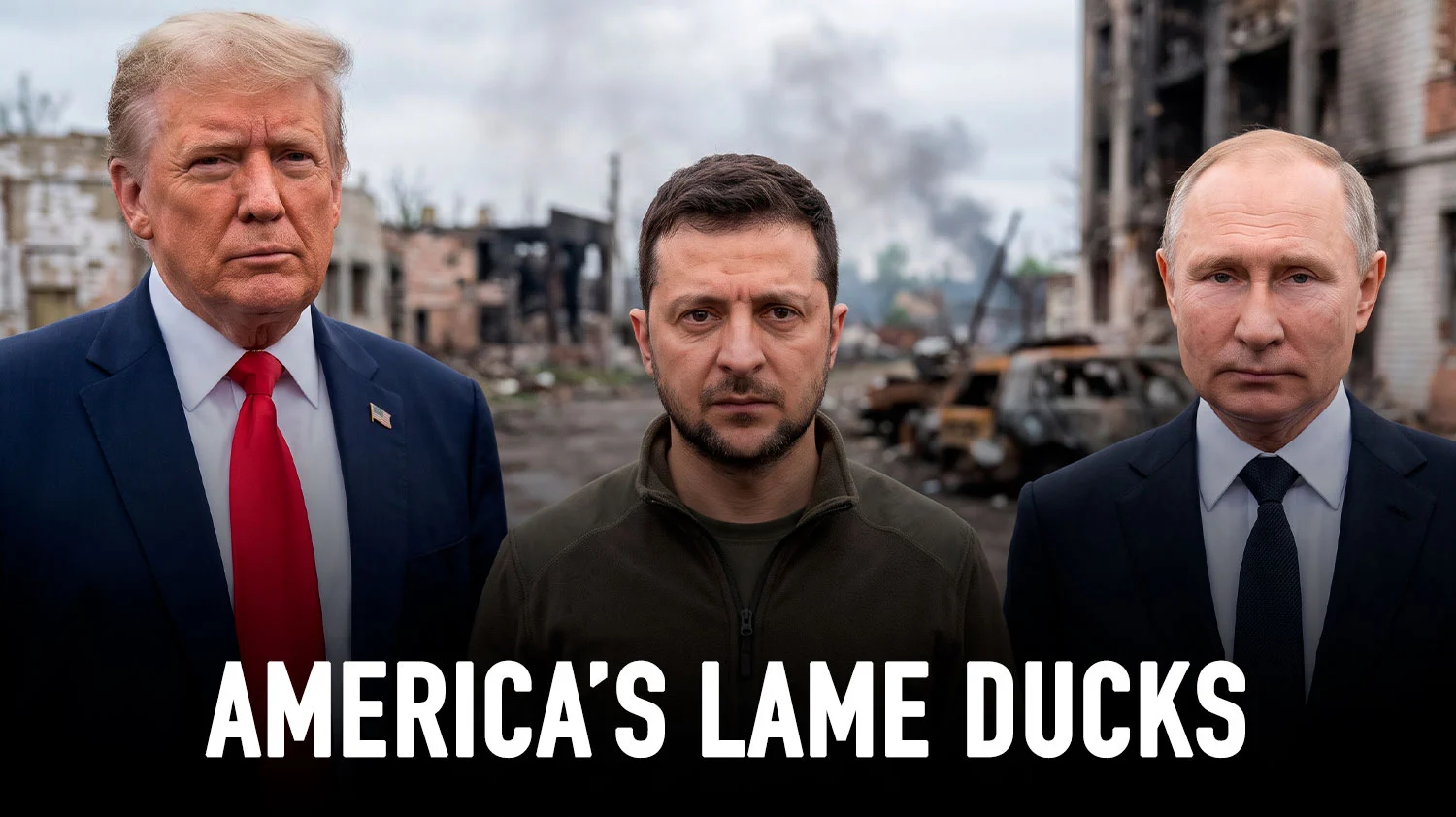
Following US voters’ massive rebuke of Donald Trump in the recent US midterm elections, one might be tempted to hope that his malign influence on global affairs will soon fade. Not likely. In the United States, lame-duck presidents often turn their attention to foreign policy, because it is the one field where there are few formal constraints on presidential action. For the seemingly bored and always narcissistic Trump, this means continuing, between the gilded vanity projects he dreams up, to stalk the world like some rogue Gulliver.
Ukrainian President Volodymyr Zelensky has few illusions about the risks Trump’s ego-driven politics pose. Trump perceives Zelensky to be the main barrier to fulfilling his desire to claim credit for ending the Ukraine war. Add to that Trump’s barely concealed “man-crush” on Russian President Vladimir Putin, and Zelensky is keenly aware of his unenviable position.
But Zelensky’s own judgment has also become clouded lately. For starters, in May, he named a special operations unit after the Ukrainian Insurgent Army (UPA), which many Ukrainians remember as heroes who fought for independence against Nazi Germany and the Soviets in the 1940s and 1950s.
But before the UPA was formed, its parent organization, the Organization of Ukrainian Nationalists, sought to form a strategic alliance with Nazi Germany against the Soviets. They turned against Hitler because his government refused to recognize a Ukrainian state, not because they objected to Nazism. The UPA, moreover, carried out a massacre of tens of thousands of Poles–perhaps as many as 100,000–and roving violence against Jews during World War II.

Poland, one of Ukraine’s closest allies, is not giving Zelensky a pass just because the UPA fought against a common enemy. Poland remembers UPA violence in the Volhynia region as genocide. So, after Zelensky’s “outrageous” decision, Polish President Karol Nawrocki moved to strip him of Poland’s highest honor, the Order of the White Eagle. Zelensky didn’t wait for the shoe to drop: he returned the medal (and stopped flying from Polish airports).
Then there was Zelensky’s decision last July to sack the defense minister, Mykhailo Federov, the architect of Ukraine’s drone-warfare program, after Federov reportedly fell out with the commander-in-chief of the armed forces. The move, which left the country’s European allies scratching their heads, was as careless as it was self-defeating.
To be sure, Zelensky named a suitable replacement, Yevhenii Khmara, a former special forces major general. But this did not negate the growing sense, particularly within the European Union, that Zelensky has become increasingly erratic, that his team is now more concerned with protecting his political position than advancing Ukraine’s security interests, and that his government is drifting off course.
That sense intensified in September, when Ukraine’s two leading intelligence services engaged in a firefight on the streets of Kyiv. Zelensky called the shootout “disgraceful,” but no heads rolled, despite the concerns that the incident must have raised among Ukraine’s allies who share intelligence with its security services.
Corruption, the bane of Ukraine’s politics and courts since independence, is also rearing its head. This month, the National Anti-Corruption Bureau of Ukraine (NABU) and its partner agency, the Specialized Anti-Corruption Prosecutor’s Office (SAPO), wrapped up their investigation into “Operation Midas,” an alleged kickback scheme at the state nuclear operator that took 10–15% of contract values, totaling over $111 million. While a former energy minister was arrested at the border, the scheme’s alleged ringleader, Timur Mindich, managed to flee to Israel.
Zelensky has not been implicated in graft, but he has close ties to those who have. Mindich is one; so is his former chief of staff, Andriy Yermak, who has been arrested on money-laundering charges.
Apparently seeking a spurious balance, NABU has also charged opposition leader Yulia Tymoshenko with offering lawmakers cash to vote against Zelensky and to switch parties. But the tactics NABU employed in gathering evidence–including its use of Russian-made surveillance equipment and software, illegal in Ukraine–are the subject of some controversy. Moreover, a judge hearing the case claims that NABU threatened to open an investigation into him because he had ruled against it.
Defense ministers suddenly dismissed, rival intelligence services trading gunfire, accusations of lawfare: these are telltale signs of a government losing its grip on the levers of the state. But it is not too late for Zelensky to get his house in order. The EU, Ukraine’s main financial and military backer, must insist on it.
Because a war presidency concentrates power, checks and balances become all the more important. Zelensky’s narrow war cabinet has proven itself highly capable, motivating a military that is outnumbered and under-resourced. But everything outside its remit, particularly civilian administration, is deteriorating.
Ukrainian politicians have already proposed a remedy. After the Midas scandal broke last November, a number of opposition parties (including Tymoshenko’s Batkivshchyna) and even some members of Zelensky’s Servant of the People party called for a national unity government.
So far, Zelensky has balked at the idea. But opposition representatives in the civilian cabinet (not the war cabinet) would provide the type of oversight that Zelensky and his team no longer seem able to supply. Britain formed such a government under Winston Churchill in 1940, as it fought alone against the Nazis. As Ukraine continues to resist Russian aggression and navigate Trump’s unpredictability, it should do the same.
Copyright: Project Syndicate, 2026. www.project-syndicate.org
Cover illustration generated using AI

Все комментарии проходят предварительную модерацию редакцией и появляются не сразу.