

MAGA Is Destroying the Culture that Built the West
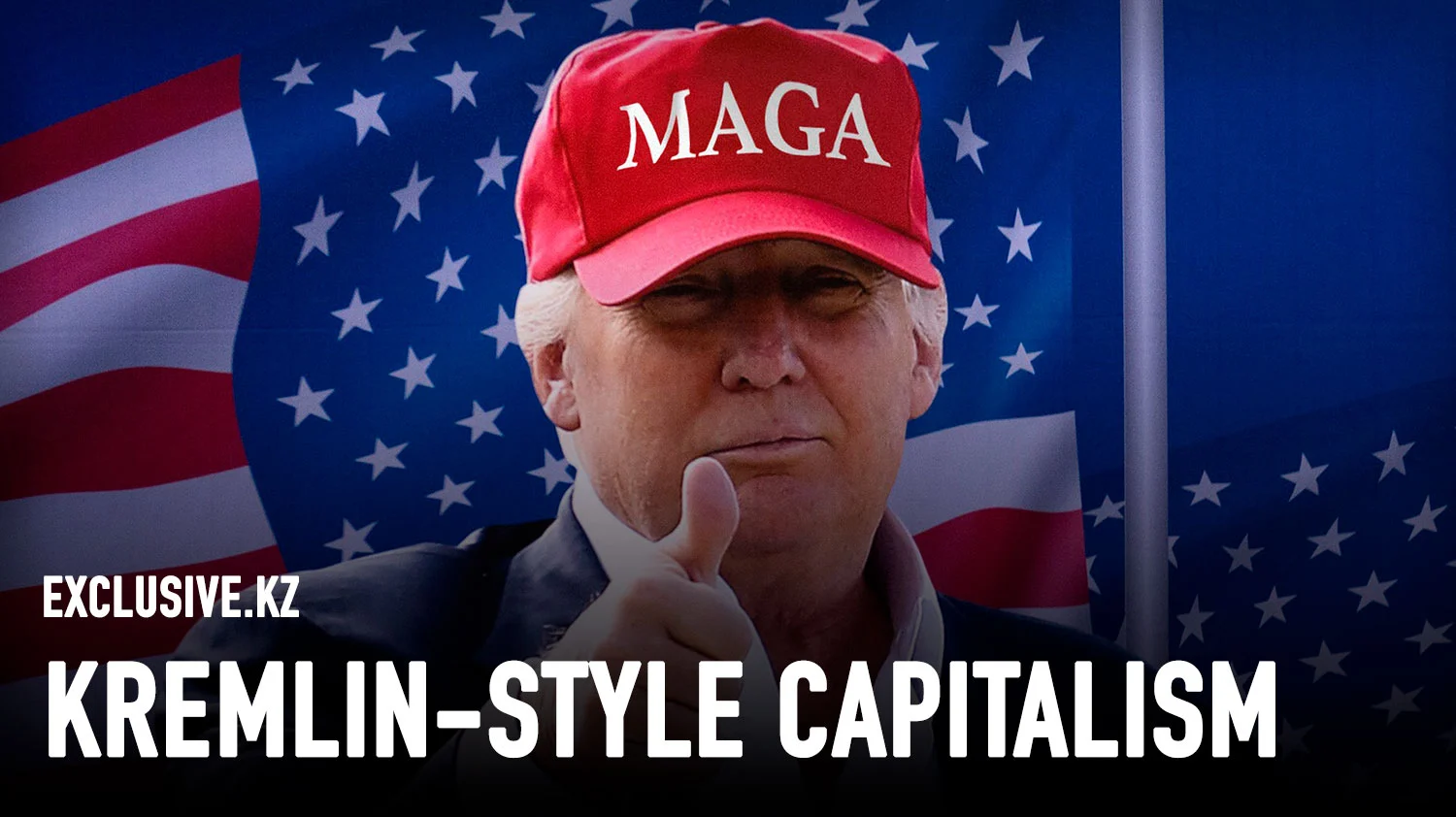
Among the more remarkable features of US President Donald Trump’s meandering speech at the World Economic Forum in Davos was his invocation of the cultural bonds that made the West so prosperous. But Trump obviously did not believe a word he said when he praised the “special culture” and “spirit that lifted the West.” After all, that culture was liberal, market-oriented, and committed to providing dignity to all people. It challenged entrenched hierarchies and rejected absolute authority. The West prospered by rejecting the type of regime he is seeking to create in America, embraced in Hungary, Turkey, and elsewhere, and would like to see take root across Europe.
Economists and sociologists have studied this culture to understand where the West’s dynamism came from. The most recent Nobel laureates in economics, Joel Mokyr, Philippe Aghion, and Peter Howitt, have made this their life’s work, and their findings are wholly incompatible with the Trump administration’s policies.
When US Secretary of Commerce Howard Lutnick declares that “capitalism has a new sheriff in town,” he mischaracterizes the essence of markets. They do not need sheriffs. They need credible rules and competition. Having a supervisor-in-chief is closer to the Chinese model than to the “spirit” to which Trump paid lip service in Davos.
Like China, the Trump administration has also tried directing resources that are better allocated through markets, as well as bluntly demanding shares of private firms. Trump even coercively engineered the sale of TikTok to ensure that one of the biggest stakes in the new US entity went to his billionaire buddy, Larry Ellison of Oracle. This is virtually crony capitalism, Kremlin-style. The traditional Western form of capitalism, mostly recently espoused by Ronald Reagan and Margaret Thatcher, would leave firms – and central banks – alone to do their work of building prosperity.

The “special culture” also rejected permanent castes and inherited status. The Athenian spirit that led to the rise of the West slowly did away with these, not least by ending absolute monarchy. The “divine right of kings” gave way to democratic elections and other mechanisms of public accountability.
Trump’s assertion that he is guided by nothing other than his own morality returns us to the Hobbesian world of the Leviathan. That system helped preserve royal privilege until liberal ideas – as espoused by Jean-Jacques Rousseau, John Locke, John Stuart Mill, and many others – undercut the rationale for the kind of absolute authority that Trump craves, and which the conservative majority on the US Supreme Court has been enabling.
The curbing of royal privilege led to greater inclusion and opportunities for all members of society to make a decent living by drawing on their own free thoughts and labor. The hierarchy of the countryside was replaced with the liberty of the city. Stadtluft macht frei – city air makes you free – said the Germans. Towns won out over the countryside and the old feudal order. Now MAGA wants to return us there.
Liberal capitalism has been the great engine of inclusion, advancing what the economic historian Deirdre McCloskey calls “bourgeois dignity.” It allowed professions to flourish and cut down old barriers to class mobility (thus falsifying Marxist predictions), and it subsequently overrode gender, race, ethnic, and national biases, as well as toppling hierarchies such as slavery and colonialism.
One of the more beautiful and enduring legacies of the culture of the West is liberal arts education, which aims to free the imagination and inculcate a belief in open-mindedness and an allergy to intellectual rigidity or dogma. Until the end of the 18th century, the prevailing assumption was that only the propertied classes could think freely. Liberal arts freed minds from the bonds of birth, a movement with roots in the Renaissance, with Machiavelli tying good governance to virtue rather than fortune.
This culture also afforded dignity to all professions. Until the 18th century, art was considered a frivolous activity, suitable only under royal patronage. But with the ever increasing commercialization of the arts, the creative professions flourished. Whereas opera on the Old Continent depended on subsidies and patronage, the Americans invented the Broadway musical and, later, Hollywood. Such market-oriented creations (all examples of creative destruction) produced the American culture that would achieve unrivaled global influence in the 20th century.
The addition of Trump’s name to the Kennedy Center in Washington symbolically returns us to the days of royal patronage, albeit without even an opera company. Trump boasts of the $250 million in patronage he has brought in, but as usual, the facts tell a different story: ticket sales have dwindled, and artists will not sing and dance at a venue that has been dragooned into advancing an illiberal vision of America.
The “pinnacle of human achievement” that Trump appeared to praise in his Davos speech rests not on authoritarianism, but on policies to encourage and attract virtue and creativity. In a recent finding, Aghion and his colleagues show that IQ, more than the fortunes of birth or economic privilege, overwhelmingly accounts for inventors and inventions. Openness to global talent is part of America’s “precious inheritance.”
The rise of the West is a simple story to tell culturally. It’s about Europe moving toward openness, cosmopolitanism, intellectual freedom, the deepening of markets, transparent rules, and, above all, institutional checks and balances. Trump’s actions and policies negate these achievements at every turn. His administration claims that Europeans face “civilizational erasure,” even as it encourages white Christian nationalism at home.
Trump and the MAGA faithful know nothing of the “spirit that lifted the West.” On the contrary, they represent everything that it swept away centuries ago.
Copyright: Project Syndicate, 2026. www.project-syndicate.org


Все комментарии проходят предварительную модерацию редакцией и появляются не сразу.