


Negotiating With the Antichrist
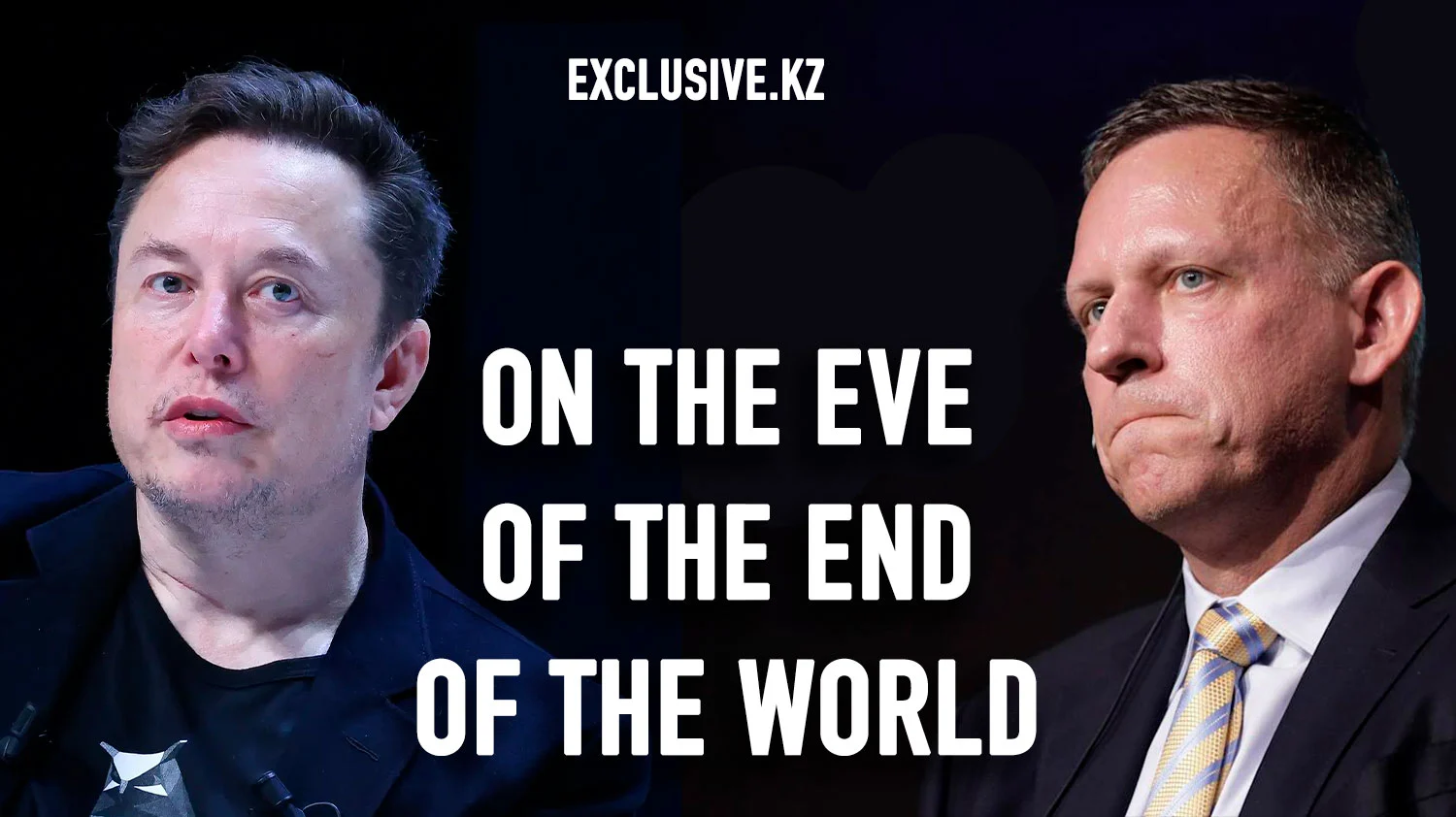
From the Kremlin to the White House to Silicon Valley, the Antichrist–or at least talk of it–is coming. The concept amounts to little more than obscure theological conjecture, arising largely from Saint Paul’s cryptic mention of a “man of lawlessness” who will “exalt himself over everything that is called God,” and sit in God’s temple, “proclaiming himself to be God” (2 Thessalonians 2:3–4). But, for a small group of rich and powerful men, the Antichrist has become the lens through which they view the world.
- The article links the Antichrist concept to figures from the Kremlin to the White House to Silicon Valley, rooted in 2 Thessalonians 2:3–4.
- Peter Thiel is portrayed as a prominent would-be Armageddon prophet, associated with PayPal and Palantir, sponsor of JD Vance, and suggesting the Antichrist could be a tyrant posing as a do-gooder; examples include Greta Thunberg and a possible one-world government.
- Thiel faced Vatican pushback when he attempted a lecture series at the Pontifical University of St. Thomas Aquinas, moving talks to Palazzo Orsini Taverna; he recently resettled in Argentina with Javier Milei mentioned as a fit.
- Elon Musk is noted as Thiel’s fellow PayPal co-founder who publicly shares Thiel’s political vision and has supported Donald Trump; Trump is described as a katechon and possibly a messianic figure by some supporters, with Defense Secretary Pete Hegseth invoking biblical rhetoric to justify actions against Iran.
- Aleksandr Dugin portrays the West as Satanic forces and Russia as the Heart of the World, with Putin as a providential katechon and the Ukraine war framed as an existential battle for the Slavic soul.
- The text compares current dynamics to Rasputin’s influence in imperial Russia, and notes Pope Leo XIV and the Vatican as a voice of reason amid millenarian currents; this is presented in the context of Project Syndicate, 2026.
Perhaps the most prominent would-be prophet of Armageddon is the billionaire tech investor Peter Thiel, a co-founder of PayPal and Palantir and sponsor of US Vice President JD Vance’s political career. Thiel’s Antichrist is sui generis: an evil tyrant who will gain global power by posing as a do-gooder and exploiting people’s fears, especially of technology. This harbinger of the end-times may already be among us, Thiel speculates, embodied by some “luddite who wants to stop all science,” like the climate activist Greta Thunberg.
Thiel’s Antichrist could also arrive in the form of a “one-world” government. As one Jesuit theologian observed, Thiel’s vision is fundamentally political, and his “practical conclusion is brutal”: any attempt to regulate AI, engage in international governance, or limit technological development becomes “preparation for the reign of the Antichrist.”
Small wonder that the Vatican has not allowed Thiel to appropriate its imprimatur for his apocalyptic rants. When he attempted to hold a lecture series on the topic at the Pontifical University of St. Thomas Aquinas (known as the Angelicum), university authorities quashed it, forcing him to move the talks to Rome’s Palazzo Orsini Taverna.

Nonetheless, Thiel can apparently draw a crowd. And he may well find a receptive audience for his Armageddon shtick in Argentina, where he recently resettled. The country’s anarcho-capitalist president, Javier Milei, is a good fit for Thiel. (The “lurid embalmed immortality” of Eva Perón, as V.S. Naipaul called it, may be as well.)
Elon Musk, Thiel’s fellow PayPal co-founder, does not talk much about the Antichrist (though on the internet’s fringes, one finds speculation that he is building the infrastructure that the Antichrist will use to rule the world). Musk does, however, share Thiel’s political vision. In fact, both have been vocal supporters of US President Donald Trump, who is often presented as a bulwark against “evils” like “wokism,” migrants, and non-Christian faiths.
In this sense, Trump fits perfectly into the Antichrist illusion: he is the katechon, or “restrainer,” whom Saint Paul describes as holding off the “lawless one” (2 Thessalonians 2:6–8). Many of Trump’s MAGA supporters–and Trump himself–might go further, portraying him as a messianic figure, more akin to Jesus Christ.
This eschatological turn in American politics justifies practically any action, no matter how violent or corrupt, as righteous. Nowhere is this more apparent than in Defense Secretary Pete Hegseth’s depiction of Trump’s war of choice against Iran as a holy crusade. He credits “God’s almighty providence” for America’s military successes, but quotes a fictionalized version of Ezekiel 25:17, featured in the film Pulp Fiction, at a Pentagon worship service, in order to rouse US troops to “righteous” violence.
But doomsday is not merely an American obsession. Perhaps the most influential voice of apocalyptic thinking today is Aleksandr Dugin, the Kremlin’s court philosopher and a leading light of 21st century Russian nationalism. For him, “Satanic forces” arise from the West–the “Kingdom of the Antichrist”–and Russian civilization is the bulwark against global spiritual collapse. The West is not simply a rival civilization with different values. It is a “lifeless world” and a “pit of the rejected,” whereas Russia is the “Heart of the World,” imbued with a “cosmic fate.”
By this logic, President Vladimir Putin is no mere strongman pursuing Russia’s interests. He is a providential figure on a sacred mission–another katechon–and the war in Ukraine is not a land grab, but an existential battle for the Slavic soul.
The consequences of such logic are far-reaching. Politics and diplomacy are rooted in the art of negotiation and compromise. Absolute claims yield to the demands of coexistence, and the future is open-ended. But apocalyptic thinking presumes to know how history ends, and interprets any compromise as capitulation.
This is apparent in Dugin’s argument that Russia and the West represent “all-encompassing super worldviews” and “mutually exclusive projects of the future of mankind.” It is also clear in the Trump administration’s portrayal of Iranians as evil and subhuman, and his threat to destroy Iran’s entire civilization. Politics and diplomacy cannot work when opponents become the embodiment of evil.
It is worth recalling the most vivid historical example of such thinking in high politics: the Siberian mystic Grigori Rasputin’s emergence as the most influential figure within Czar Nicholas II’s court. Rasputin was not merely a reflection of Nicholas and his wife Alexandra’s personal weakness, though he is said to have soothed their hemophiliac son. By the time Rasputin arrived on the scene, imperial Russia was on its last legs, and its exhausted monarchy, having run out of rational answers to the country’s problems, embraced the supernatural.
A similar dynamic appears to be at work in both the US and Russia today, with the acolytes of Trump and Putin nurturing millenarian visions in the face of regime dysfunction. We have reached a point where Pope Leo XIV and the Vatican have become a voice of reason.
Copyright: Project Syndicate, 2026. www.project-syndicate.org



Все комментарии проходят предварительную модерацию редакцией и появляются не сразу.