


The Gulf’s Post-OPEC Order
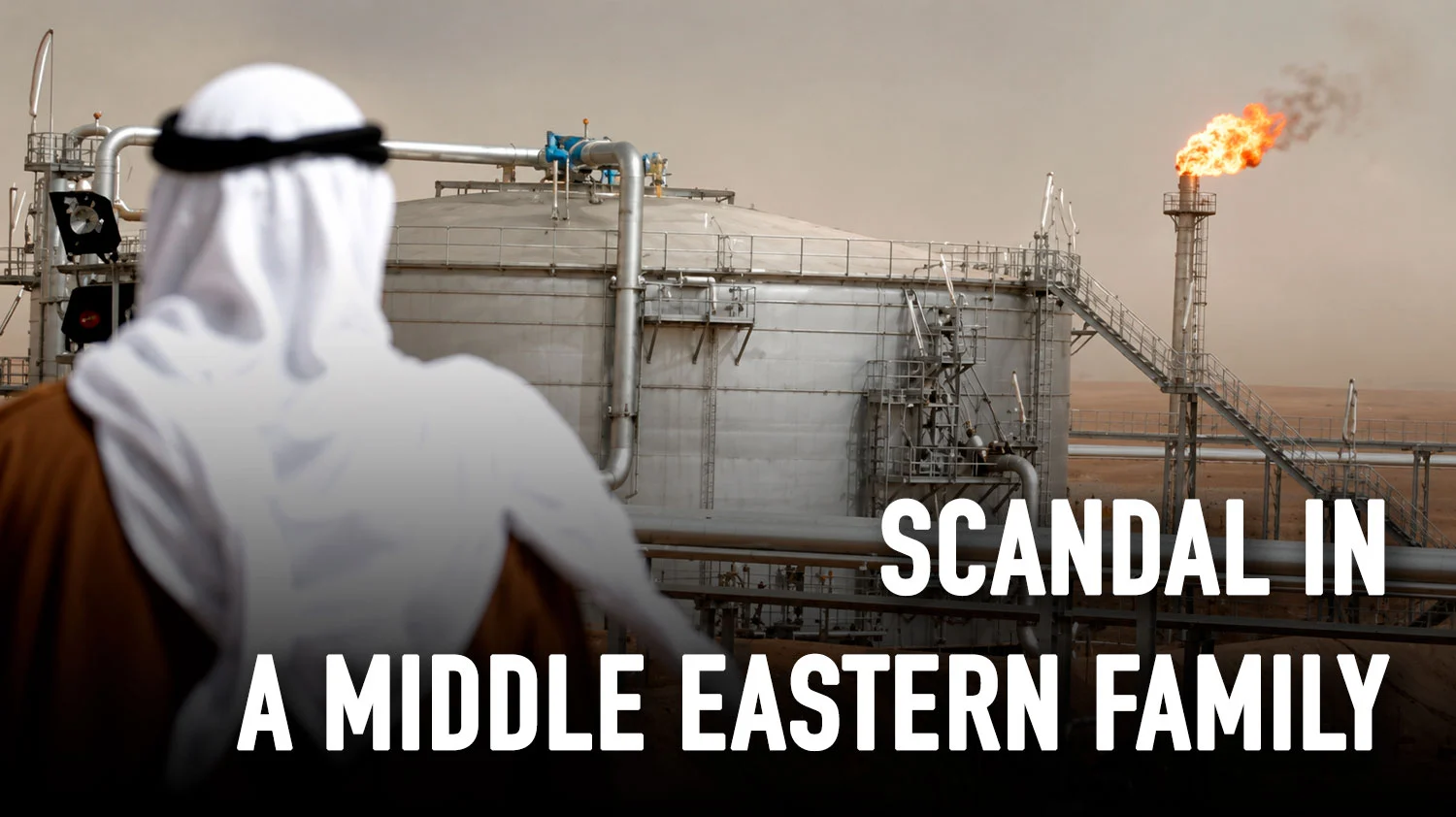
The United Arab Emirates’ decision to leave OPEC and OPEC+ after nearly six decades of membership has dealt a major structural blow to the cartel. Losing its third-largest producer–capable of pumping nearly five million barrels a day, with ambitions to expand further–will make it increasingly difficult for the bloc to perform its central function: managing supply and stabilizing oil prices. Over time, the UAE’s freedom to produce at will, particularly once the Strait of Hormuz reopens, is likely to drive down crude prices and increase market volatility.
- The United Arab Emirates left OPEC and OPEC+ after nearly six decades of membership.
- The UAE is the bloc's third-largest producer, pumping nearly five million barrels a day, with ambitions to expand further.
- OPEC's central function of managing supply and stabilizing oil prices is expected to be harder to fulfill without the UAE.
- The UAE’s exit signals a shift away from a Saudi-led regional order toward closer alignment with the United States and Israel and integration into global markets.
- The timing coincides with the Strait of Hormuz being closed and Iranian ports under US blockade, constraining Gulf producers.
- Energy Minister Suhail al-Mazrouei said the departure will not materially affect oil prices in the short term, sparing OPEC and Saudi Arabia immediate pain.
- The split exacerbates tensions with Saudi Arabia, leading to a deterioration of UAE–Saudi cooperation, greater use of proxies, and discussions about leaving regional groupings like the GCC or Arab League.
But exiting OPEC is much more than an energy-policy adjustment. It is the clearest expression yet of the UAE’s decision to break from the Saudi-led regional order. Above all, it reflects a wager that the country’s future lies in closer strategic alignment with the United States and Israel and deeper integration into global markets, rather than Gulf solidarity.
The timing is no accident. With the Strait of Hormuz closed, Iranian ports under US blockade, and no resolution in sight, every Gulf producer is already constrained. Against this backdrop, as Energy Minister Suhail Mohamed al-Mazrouei noted, the UAE’s departure will not materially affect oil prices in the short term, sparing OPEC and its largest member, Saudi Arabia, any immediate pain. But this framing is a quiet admission that, under normal market conditions, the move would have been far more disruptive. It also suggests that the UAE was waiting for political cover to announce a decision that had likely been made long before the war began.
The geopolitical implications are profound. By quitting OPEC, long considered an instrument of Saudi power, the UAE has called into question the Kingdom’s leadership of the world’s foremost commodity cartel.

Relations between the two countries had been deteriorating long before the split. Over the past few years, the UAE has signed roughly 30 bilateral trade agreements outside the Gulf Cooperation Council framework, reflecting its growing frustration with what Emirati officials have described as the GCC’s glacial pace of decision-making. In response, Saudi Arabia has restricted UAE exports that fail to meet GCC labor-content thresholds and pressured multinationals to relocate their regional headquarters to Riyadh as a condition for securing Saudi contracts. That requirement has been enforced more aggressively since April, though a handful of exemptions have been quietly granted.
While the underlying commercial and financial infrastructure linking the UAE and Saudi Arabia is unlikely to unravel (the two economies remain deeply intertwined), the era of Emirati deference is over. The UAE has made clear it will not subject itself to GCC-level constraints that it views as too great an impediment, too favorable to Saudi Arabia, or both.
The security implications are equally far-reaching. The war with Iran has accelerated the emergence of a trilateral US–Emirati–Israeli security architecture, whose foundation had already been laid by the Abraham Accords. Emirati officials made no secret of their dissatisfaction with the GCC’s collective response as Iranian missile and drone barrages pounded the Gulf. As a result, the UAE has concluded that its real security guarantors sit in Washington and Jerusalem rather than Riyadh. Leaving OPEC is, in this sense, a signal to the US and Israel–and to global capital markets–that the UAE intends to pursue its interests through global alliances rather than as a junior partner in a Saudi-led order.
The reverberations of this shift are already being felt across the region. Once-unthinkable discussions about leaving the Arab League, and even the GCC, are now occurring openly within Emirati policy circles. While that does not suggest an imminent institutional rupture, it does mean that Saudi primacy–which has shaped Arab diplomacy for half a century despite chronic fragmentation and regional rivalries–can no longer be assumed.
Given that Saudi Arabia and the UAE already back opposing factions in Yemen, Sudan, Somalia, Syria, and Libya, their deteriorating relationship is likely to fuel instability across the region’s periphery. The collapse of the anti-Houthi coalition in late December was the most visible manifestation of this growing divide, but it will not be the last. As the two countries’ willingness to cooperate wanes, each will invest more aggressively in clients and proxies, prolonging some of the world’s most intractable conflicts.
Western policymakers may be tempted to view the UAE’s OPEC exit as an unambiguous victory: more oil, lower prices, a weakened cartel, and a Gulf partner moving firmly into the US camp. While all of that is true, none of it is cost-free. A more independent UAE will be less tethered to Saudi Arabia, but it will also be more beholden to other powers, including the US.
At the same time, a Saudi Arabia stripped of its assumed diplomatic leadership will come under pressure to reassert its regional influence. And with the Gulf’s two largest economies no longer even pretending to coordinate, smaller states will be forced to hedge more aggressively by seeking additional patrons. The risk of escalation, in turn, will rise.
However disruptive the UAE’s departure from OPEC may be to oil markets, lower prices and greater volatility are ultimately manageable. But the breakdown of the regional architecture that has held the Gulf together for decades could usher in a far more fragmented Middle East. What comes next will be more fluid, more transactional, and far harder to predict.
Copyright: Project Syndicate, 2026. www.project-syndicate.org


Все комментарии проходят предварительную модерацию редакцией и появляются не сразу.