


Features of Trumpism
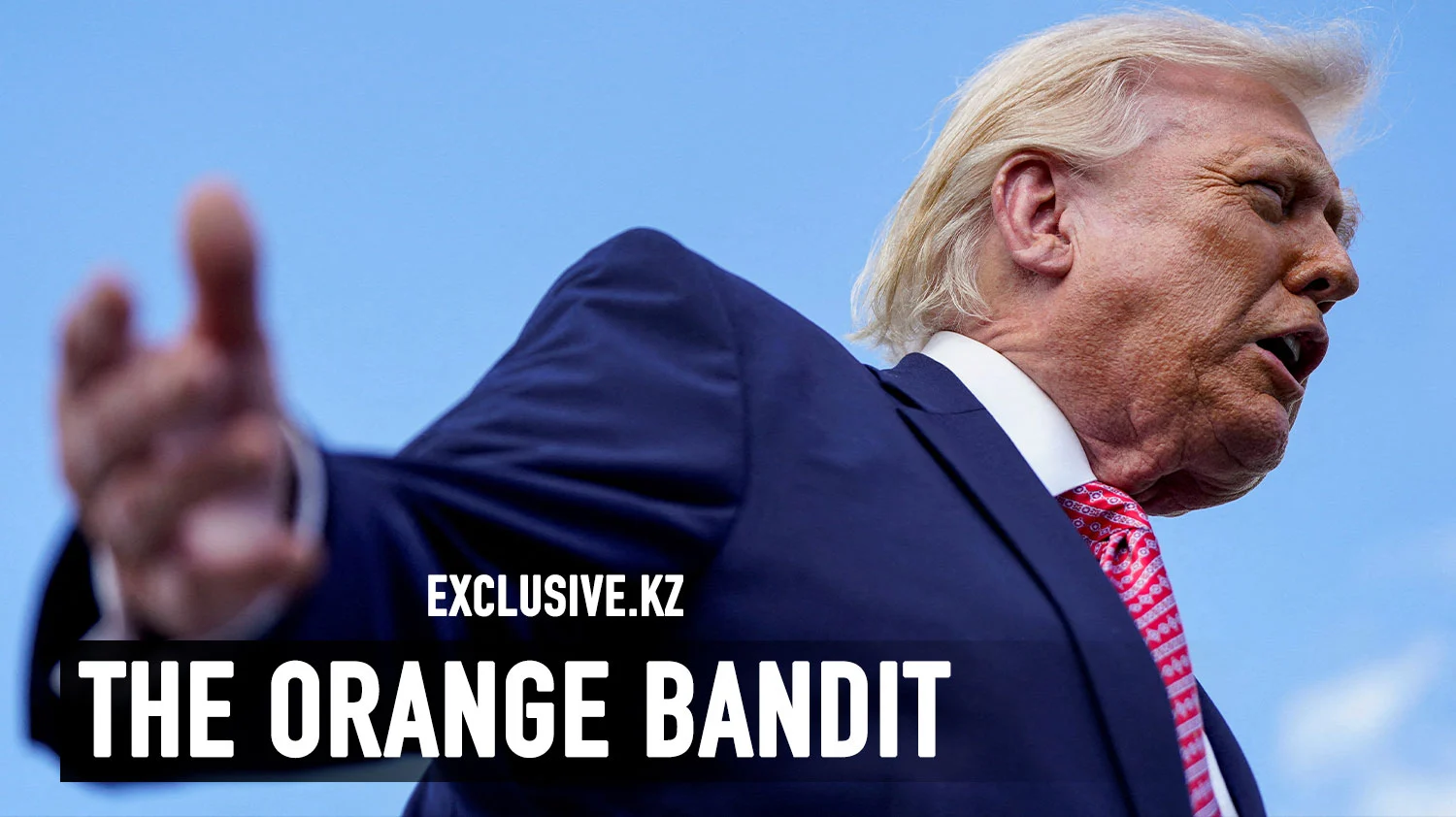
Is there any way to make sense of US President Donald Trump’s peculiar approach to governance? The economist Mancur Olsen offered a framework nearly three decades ago in his work on the origin of states.
Drawing a contrast between “roving” and “stationary” bandits, Olsen surmised that governments form when roving bandits settle down to exploit those immediately around them. Having become stationary, they can pursue one of two tactics: Encourage economic activity that can then be taxed, or pillage freely. You can “shear the sheep” for many years, as the Roman Emperor Tiberius may have said, or you can “skin them alive” just once.
This critical choice, Olsen explained, hinges on whether leaders are far-sighted or myopic. In his second term, Trump has been tugged between these versions of the state. But it now looks as though the skin-them-alive approach is winning out.
It didn’t have to be this way. Back in November 2024, Trump was well positioned to take the other path. He had just won an election by capturing record shares of Black male and Hispanic voters. If only he had governed as a moderate upon returning to the White House, this winning coalition might well have held, bringing closer to fruition the political strategist Karl Rove’s dream of a permanent Republican majority.

Instead, Trump took his win as a blank check and advanced a maximalist political project, embracing the Heritage Foundation’s Project 2025, musing about an unconstitutional third term, and breaking his promise of “no new wars.” He is now historically unpopular, even if he maintains an iron grip on Republican primary voters.
But there are obvious limits to any long-term project that lacks broad support. As these come into sharper focus, Trump has increasingly pivoted to pursuing short-term goals, namely by pillaging the republic to increase his and his allies’ wealth.
To be sure, the self-dealing was there from the beginning. According to one estimate, the Trump family has raked in more than $4 billion from shady deals leveraging this second presidency. Yet the scale of corruption is increasing in 2026. Consider the unprecedented, ongoing attempt to insulate Trump and his intimates from tax law in perpetuity (even as he has backed away from his $1.8 billion “weaponization” fund); or the increasing pay-to-play use of the pardon power; or the fact that the Trump Organization has ten overseas development deals underway-and 22 more in the pipeline-with strategic US partners such as Qatar and Saudi Arabia.
Meanwhile, the president has effectively abandoned the political project of continuing unified Republican rule. He has used his influence with Republican primary voters to boost several subpar candidates over more qualified ones, simply because the less-ideal ones express unconditional loyalty to him. When asked about his Iran war’s impact on Americans’ cost of living, he has made it clear that he does not care.
What explains this shift from a long-term outlook to a short-term one? Though Olsen’s framework does not provide much help here, there are distinctive features of the American constitutional order that might shed light on the apparently irresistible second-term temptation to indulge in self-dealing. The first is Trump’s reluctant realization that the Constitution’s 22nd Amendment really does rule out a third term. This seems to have sunk in only recently, and the effects may have only begun to bite.
Second, recent changes to the legal environment make it even less likely that Trump or his allies will be punished for their corruption. Newly minted Supreme Court rulings have narrowed federal public corruption statutes almost beyond recognition, not to mention formally immunizing presidents from criminal prosecution for most “official” acts. The Court has even prohibited the use of documents showing a president’s motives in criminal trials, thus undermining any future prosecution of White House-linked corruption, however blatant.
Third, Congress’s failure to remove or bar Trump from office despite impeaching him twice during his first term was a death sentence for the American founders’ preferred remedy against corruption. Even with expected GOP losses in the midterms, Republicans will certainly have enough Senate seats to head off an impeachment conviction.
These legal factors-some of recent origin-provide the background conditions for Trump’s transformation into a stationary bandit. They also suggest that the scale of Trump-enabled graft is likely to accelerate as short-termism becomes a governing philosophy.
Consider Acting Attorney General Todd Blanche’s recent effort to insulate permanently the president’s companies from tax scrutiny. If Trump can get away with that, his businesses will have a free hand to violate tax and good-government laws with abandon. We can expect many more no-bid, sweetheart contracts between the government and his allies. Contracts like the five-year deal that Palantir just signed with the Pentagon will lock in future administrations, since they cannot break ties absent evidence of fraud or abuse.
We can also expect the Trump administration to abuse its regulatory powers. Because the Supreme Court’s so-called unitary executive decisions have blessed Trump’s personal control over regulation, he can now use his office to elicit transfers from private companies to favored allies. Recall that in its deals with law firms that were eager to avoid sanctions, the White House explored the idea of retaining free legal representation for the president and his cronies. The Justice Department’s “weaponization” slush fund simply tried to scale up the same logic.
All these trends point to an open market for presidential favors in the form of pardons or regulatory breaks. So, too, does the White House’s recent effort to seize control of federal grantmaking, which will corrupt everything from scientific research to community daycare. Politics, not merit, will be the deciding factor. As Justice Ketanji Brown Jackson warned during oral arguments in the presidential immunity case, the Oval Office has become “the seat of criminal activity in this country.”
Yet corruption’s rising tide can also breed new political coalitions capable of enacting reforms. In Hungary, a public backlash against self-dealing ended the 16-year rule of Trump’s illiberal soulmate Viktor Orbán. The new prime minister, Peter Magyar, is now opening parliamentary anti-corruption investigations and signing up to work with the European Union’s anti-fraud watchdog. It is a small mercy that the rise of overt kleptocracy here might have the same side-effect of unifying a fractious opposition. But whether that will be enough to revive accountability in America remains to be seen.
Copyright: Project Syndicate, 2026. www.project-syndicate.org




Все комментарии проходят предварительную модерацию редакцией и появляются не сразу.