

How Trump changed the world in 2025
Writing about 2025 from an American perspective is both easy and difficult. It is easy because there is so much to choose from. And it is difficult for the same reason.
On the domestic front, even a short list would include: the longest-ever government shutdown; the national debt surpassing $38 trillion; persistent inflation, along with increased joblessness and inequality amid accelerating, AI-fueled economic growth; growing political violence; efforts to seal the southern border to illegal immigration coupled with mass deportations; the deployment of national guard troops to Los Angeles and several other American cities; attacks on universities and on programs meant to promote diversity; the imposition of massive import tariffs; reductions in public-sector employment, including the US Agency for International Development; and considerable defunding of scientific research.
Foreign-policy developments were no less momentous. The United States joined Israel in launching armed attacks on Iranian nuclear facilities, setting its weapons program back years. A US diplomatic push did not achieve peace in Gaza, but it did bring about the release of the Israeli hostages and thousands of Palestinian prisoners, and an uneasy, incomplete ceasefire. Another diplomatic push to end the war between Russia and Ukraine has also failed so far to deliver peace but has succeeded in aligning the US with Russia and further distancing it from Europe.
Closer to home, a large US military presence was assembled off Venezuela and more than 20 boats allegedly carrying drugs were attacked, and oil exports partly blockaded, to pressure the government there to cede power. The sovereignty of Canada, Greenland, Panama, and Colombia was threatened by President Donald Trump at one time or another. The US withdrew from the World Health Organization and from global efforts to combat climate change. At the same time, it promoted fossil-fuel production and cut spending on wind and solar power. Efforts designed to promote democracy and human rights in other countries were largely terminated.

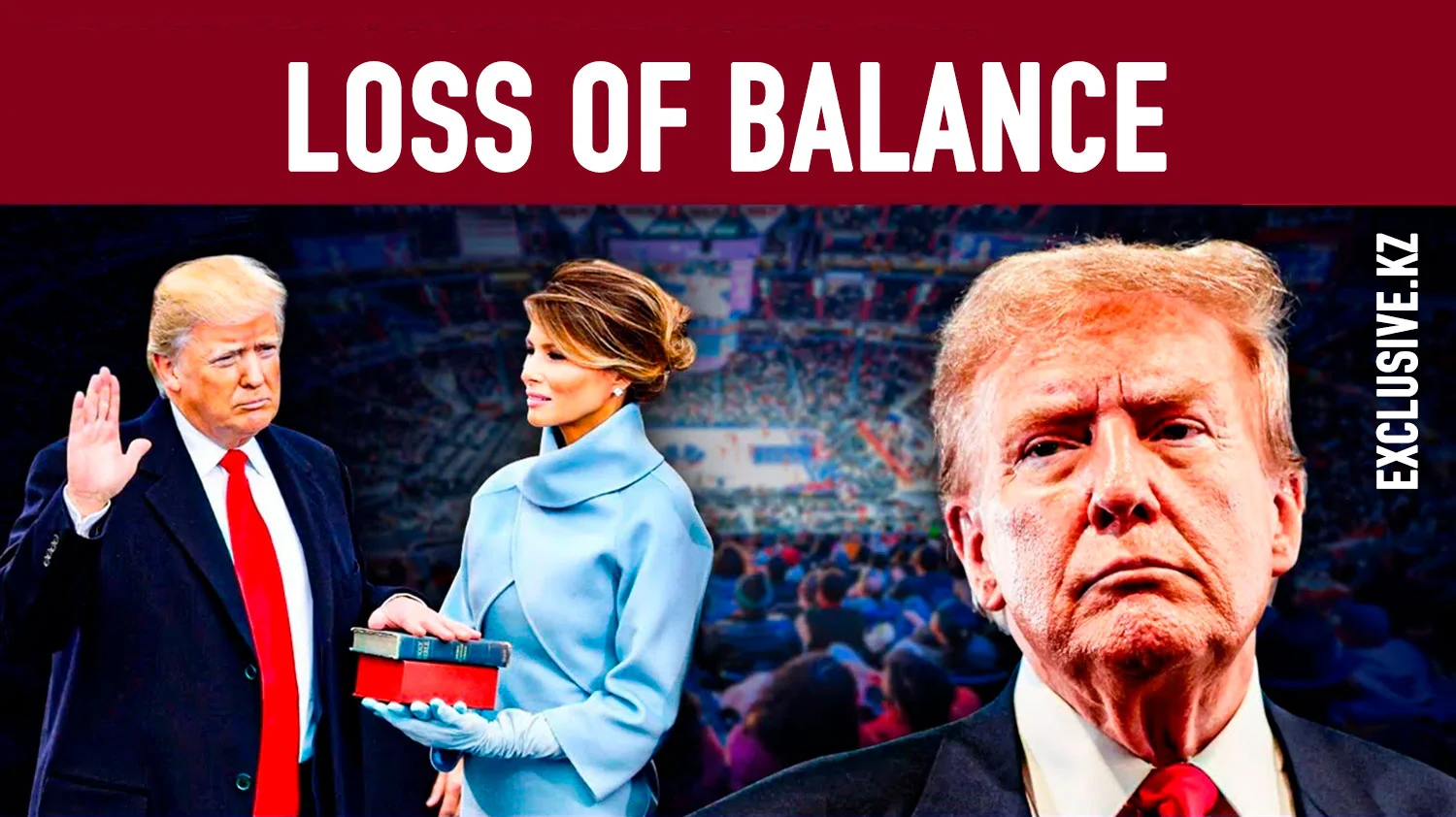
The consequence? Significant power imbalances emerged both at home and abroad in 2025.
At home, the first year of the second Trump presidency stood out for its excessive assertion of executive primacy. Trump signed hundreds of executive orders and thousands of pardons, fired public officials meant to exercise independent judgment, pressured others to bend to his will, and pursued legal retribution against perceived political enemies. The sudden bulldozing of the East Wing of the White House to make way for a large ballroom, and the abrupt renaming of the Kennedy Center, were emblematic of Trump’s rejection of decorum along with due process and oversight.
What stood out just as much as Trump’s assertion of power was congressional Republicans’ unwillingness to provide a check on the president, and the deference shown to him by the Supreme Court. Not since Franklin Delano Roosevelt has any president accumulated such a degree of control, but unlike FDR, who could point to the Great Depression and World War II as justifications for his actions, Trump inherited no emergency. He simply did things – and others acquiesced.
Trump’s unconstrained presidency is at odds with the American political tradition. Central to American government and democracy is the notion of checks and balances – that the three branches of the federal government are meant to govern jointly and ensure that no single branch dominates. This has failed utterly: Trump acts, and few react.
Abroad, Trump gave unprecedented focus to the Western Hemisphere – best understood as an extension of homeland security, a domain where concerns over drugs, immigration, and commerce intersect – and on promoting commercial interests everywhere. This strategy meant distancing the US from allies and friends in Europe and Asia and cozying up to Russia and China. As a result, the balance of power shifted in favor of countries that, until recently, had been seen as actual or potential adversaries.
Looking ahead, how the Supreme Court rules on Trump’s assertion of emergency powers to justify his prolific use of tariffs, his signature economic policy, will prove informative. Equally revealing will be whether congressional Republicans demonstrate increasing willingness to distance themselves from Trump, which could happen if they believed he was becoming a political liability.
Even more important will be the November 2026 midterm elections. History suggests that given Trump’s low approval rating, the party out of power – the Democrats in this case – will pick up seats, gaining control of at least the House of Representatives. With that would come the ability not just to frustrate legislation sought by the White House but to investigate the administration. Trump is eager to avoid that outcome. The question is not simply whether Democrats will prevail in a free and fair election but whether the elections will be free and fair – an unexpected test of American democracy just months after it turns 250.
Overseas, Trump’s emphasis on the Western Hemisphere and on ousting Nicolás Maduro’s regime in Venezuela means less attention will be devoted to Europe and Asia, and fewer assets devoted to balancing Russia and China. This outcome will be even more pronounced if Trump doubles down on the use of military force against Venezuela to achieve his aims.
This, of course, raises the question of what the US is prepared to do vis-à-vis Russia and China. There is no sign the Trump administration will provide Ukraine with the military, economic, and diplomatic support it needs to convince Russian President Vladimir Putin that time is not on his side and that more war will not yield more results. But that is precisely what maintaining a balance of power and deterring further Russian aggression in Europe requires.
Similarly, there are doubts about Trump’s willingness to stand by America’s friends and allies in the Asia-Pacific, in particular Taiwan. His planned trip to China in the spring of 2026 could show whether his desire to reduce America’s trade imbalance takes precedence over maintaining the balance of power in a region critical to the world’s future.
Systems out of balance tend to evolve either in the direction of further imbalance or toward a new or restored equilibrium. What Trump is willing and able to do will go a long way toward determining this evolution – and with it, the history of this era. As such, 2026 promises to be a pivotal year for the US and the world.
Copyright: Project Syndicate, 2025. www.project-syndicate.org



Все комментарии проходят предварительную модерацию редакцией и появляются не сразу.