


Latin America’s Agricultural Boom Is Faltering
Latin America and the Caribbean (LAC) is a regional agricultural powerhouse. Although it accounts for just 8% of the global population, LAC contributes nearly 16% of agricultural exports, with Mexican avocados, Argentine beef, Colombian coffee, and Chilean salmon now considered staples in supermarkets and households around the world.
- Latin America and the Caribbean (LAC) accounts for 8% of the global population and about 16% of agricultural exports, with Mexican avocados, Argentine beef, Colombian coffee, and Chilean salmon featured as global staples.
- Agriculture employs one in six people in the region and represents 6% of LAC GDP, more than legal mining.
- From the 1960s through the early 2000s, agricultural production in LAC increased sixfold, driven largely by gains in total factor productivity (TFP).
- Since the late 2000s, growth has relied more on increased inputs (land, water, fertilizers) than on efficiency or technological change; between 2010 and 2020, 40% of output growth came from TFP and 60% from greater resource use.
- When environmental sustainability is considered, annual productivity growth falls by more than half compared with conventional estimates, especially where deforestation and soil degradation occurred.
- Technological progress remains the key driver of productivity, with countries like Brazil and Chile achieving stronger gains; Argentina could double output with existing resources, but smallholders face limits due to access to assistance, credit, and market information.
- Policy implications include prioritizing investments in public goods (research, infrastructure, data systems, climate-resilient technologies) over price supports; Bolivia saw gross production value per hectare rise 92% and household income up 36% from a technology-adoption program, while Peru saw productivity rise by more than 15% from a pest-management program.
- Conclusion: if policymakers act decisively to support innovation and human capital, agriculture can continue to drive rural prosperity, food security, and sustainable growth; otherwise stagnation and climate risks threaten progress.
Agriculture is critical to livelihoods across the region. The sector accounts for one in six LAC jobs, sustaining many poor rural communities with vital income. It represents 6% of the region’s GDP–more than legal mining–making it a major driver of growth.
In a recent study, we examined agricultural productivity trends since the 1960s. Our findings challenged long-standing perceptions of a lagging sector. We found that decades of strong productivity growth have enabled many farms across the LAC region to evolve into modern, highly efficient enterprises.
But our findings also highlight several troubling trends. Productivity has stagnated in recent years, and the sector now faces an uncertain, potentially unsustainable future. Meanwhile, rural poverty remains widespread, and food insecurity is stubbornly high. But if governments and the private sector act decisively, the region has an opportunity to reduce rural poverty and strengthen global food security.

The end of LAC’s decades-long productivity boom should serve as a wake-up call. From the 1960s through the early 2000s, the region’s agricultural production increased sixfold. Much of this remarkable growth was driven by gains in total factor productivity (TFP), as farmers adopted new technologies, management practices, and resource-allocation strategies that enabled them to produce more with the same or fewer inputs.
Since the late 2000s, however, agricultural growth has relied less on efficiency gains or technological change and more on the increased use of inputs such as land, water, and fertilizers. Between 2010 and 2020, only 40% of agricultural output growth came from TFP, while 60% was driven by greater resource use. This marked a sharp departure from previous decades, when productivity improvements were the sector’s primary growth engine. In effect, the region has increasingly drawn down its natural capital to sustain agricultural expansion.
Input-driven growth is costly, environmentally damaging, and ultimately unsustainable. Yet traditional productivity metrics render pollution, deforestation, and resource depletion effectively invisible. Once environmental sustainability is factored into the analysis, the picture changes dramatically: annual productivity growth falls by more than half compared with conventional estimates, particularly in areas where agricultural expansion has led to deforestation and soil degradation. If productivity continues to stagnate, LAC countries risk losing competitiveness, with grave implications for regional and global food security.
Looking ahead, technological progress–improved seeds, better management practices, mechanization, irrigation, and digital tools–remains the single most important driver of productivity growth. Countries that have consistently invested in agricultural innovation systems, such as Brazil and Chile, have achieved stronger and more sustained gains in efficiency and yields.
At the same time, stagnant productivity growth suggests that many farmers are struggling to make the most of the technologies available to them. In Argentina, for example, our findings show that producers could double their output using existing resources. The challenge is particularly acute for smallholders, whose productivity gains are often constrained by limited access to technical assistance, credit, and reliable market information.
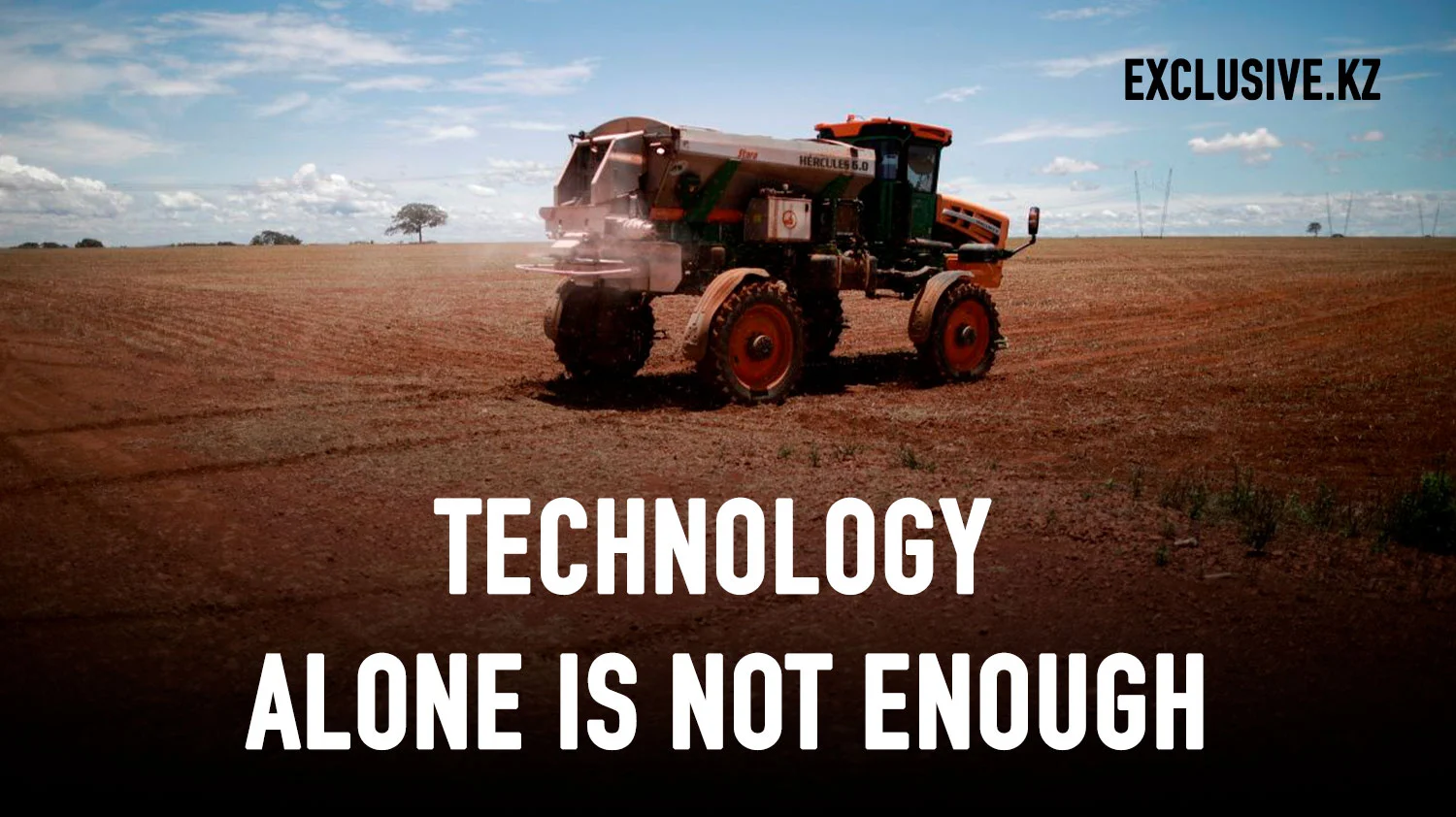
Taken together, these findings point to a clear conclusion: technology alone is not enough. Translating innovation into sustained productivity gains requires additional investments in human capital, institutional capacity, and technical support.
The good news is that governments can take concrete steps to boost rural incomes, strengthen food security, and promote sustainable growth. Our findings show that how governments support agriculture matters more than how much they spend. Distortive policies, such as price supports, are often associated with lower productivity and weaker incentives to innovate. By contrast, investments in public goods–including research, infrastructure, sanitation, data systems, and climate-resilient technologies–are consistently linked to stronger long-term productivity growth.
Drawing on a decade of rigorous evaluations of programs financed by the Inter-American Development Bank, we argue that governments must move beyond one-size-fits-all approaches to close the technical efficiency gap. When producers are empowered to adapt technologies to local conditions, the results can be transformative. In Bolivia, for example, a technology-adoption program increased gross production value per hectare by 92% and raised household income by 36%. In Peru, an innovative pest-management program that combined new technologies with training raised productivity by more than 15%.
These examples illustrate how targeted investment can unlock substantial productivity gains across the LAC region. If policymakers seize this opportunity, agriculture can continue to serve as a powerful driver of rural prosperity, food security, and sustainable economic growth. Otherwise, stagnating productivity and mounting climate risks will threaten to reverse decades of hard-won progress.
Copyright: Project Syndicate, 2026. www.project-syndicate.org




Все комментарии проходят предварительную модерацию редакцией и появляются не сразу.