

Trump’s Lasting Mark
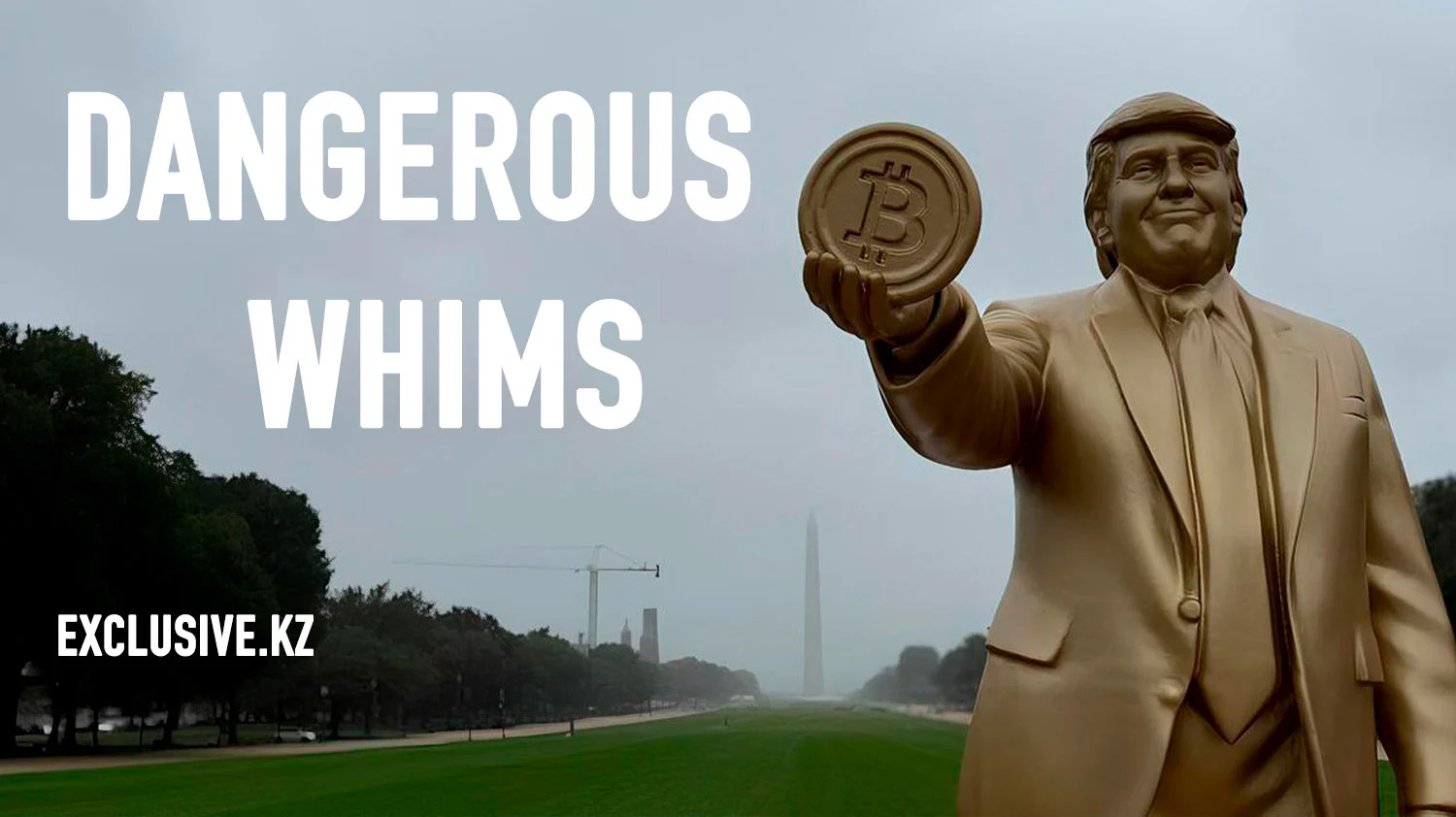
Donald Trump has spent much of his second term as US president proposing monuments to himself: a 250-foot triumphal arch between the Lincoln Memorial and the Arlington National Cemetery; a gilded, gargantuan White House ballroom; a planned remodeling of the Kennedy Center (renamed the Trump Kennedy Center); and a broader effort to remake Washington’s landscape in his preferred aesthetic.
- Donald Trump proposed a 250-foot arch between the Lincoln Memorial and Arlington National Cemetery, among other monuments and remodeling plans in Washington.
- Media outlets described these as Trump’s imprint on federal institutions and the capital’s landscape.
- A March 2025 executive order targets the Smithsonian to restore what it calls truth and sanity by purging ‘anti-American ideology.’
- The article discusses imprinting as a process by which formative moments shape institutions, memory, and rules that are hard to reverse.
- It references past U.S. leaders (Reagan, Eisenhower, Nixon, Clinton, Obama) to illustrate how presidents influenced long-term ideological trends and governance.
- The piece argues that defeating imprinting requires procedural, legal, and constitutional challenges, election-driven institutional hardening, and safeguards like independent appointment processes and preservation rules.
It is tempting to dismiss these plans as mere narcissistic excess, but that would be a mistake. America’s rococo leader has long understood something many of his critics do not: spectacle shapes public reality and institutional memory.
Media outlets have repeatedly described Trump’s plans as his “imprint.” A recent New York Times headline referred to his proposed arch as “another imprint” on Washington, while Reuters reported that Trump had moved to “imprint his image and influence on federal institutions.” The Associated Press, for its part, has framed the White House ballroom as part of a bid to leave his “lasting imprint” on the capital.
While journalists use the term “imprint” descriptively, they are also, perhaps unintentionally, identifying something deeper–and more dangerous–than ordinary presidential vanity.

In biology and the social sciences, imprinting refers to a specific process by which institutions, organizations, and individuals absorb the conditions of a formative moment and carry them forward in ways that are hard to reverse. Understanding this concept is essential not only for making sense of Trump’s actions but also for identifying how to stop them.
In our 2022 book Mao and Markets, Kunyuan Qiao and I examined how Mao Zedong transformed China’s political system so profoundly that his successors were forced to operate within the boundaries he established. For all their transformative effects, Deng Xiaoping’s reforms did not erase Mao’s imprint on Chinese institutions and culture. Markets expanded, private enterprise grew, and China integrated into the global economy, but these developments took place within a system designed to preserve the Communist Party’s authority.
Many Western observers misinterpreted China’s trajectory, assuming that markets would override ideology and push the country toward liberal democracy. Instead, reforms changed how the system functioned while leaving its underlying structure intact. Seen through this lens, President Xi Jinping’s tightening of party control is less a departure from the political reforms of the Deng era than a reactivation of forces that never truly disappeared.
China’s experience should serve as a cautionary tale for the United States. If Trump’s imprint is entrenched through monuments, politicized agencies, subservient courts, and official narratives that impose a more exclusionary vision of American identity, future presidents may find themselves bound by a system he has already warped.
To be sure, the US is no stranger to this dynamic. Ronald Reagan leveraged the stagflation crisis of the 1970s to advance a small-government ideology that his successors, including Democrats Bill Clinton and Barack Obama, largely accepted–just as Republicans Dwight D. Eisenhower and Richard Nixon had largely accepted the big-government ideology of the New Deal.
Trump is now attempting to forge a competing legacy–one built on personal authority, cultural exclusion, and the rewriting of history–just in time for the 250th anniversary of the Declaration of Independence. Rather than isolated gestures, his planned construction projects are part of a coordinated attempt to inscribe his preferred symbols into the capital’s physical landscape.
Trump’s March 2025 executive order targeting the Smithsonian extends that logic to the institutions that shape public memory. Calling for “restoring truth and sanity” to US history by purging so-called “anti-American ideology,” the order seeks to establish whose version of America becomes official.
This is where the concept of imprinting is particularly useful. The danger is not Trump’s craving for grandiosity. It is that he understands, better than many of his opponents, how to convert temporary power into lasting constraints. His architectural projects and assaults on independent institutions are all part of the same strategy. If successful, his legacy will endure regardless of whether Republicans continue to support him or if the MAGA agenda remains popular, because it will be embedded in structures–institutional but also physical–that outlast him.
There are, however, steps that Trump’s opponents can take to avert such an outcome. The first is to deny permanence more aggressively. Too often, critics treat each construction project, executive order, and institutional attack as an isolated absurdity. Trump benefits when his critics are divided into aesthetic, political, and legal camps. His project is integrated, and the response must be, too.
That means resisting the temptation to focus only on “major” fights. During Trump’s first months in office, Democratic leaders debated whether to respond selectively to his institutional attacks, with Senator Chuck Schumer arguing that “we are picking the most important fights and lying down on the train tracks on those fights.” That was a mistake. Any project that requires congressional authorization, appropriations, preservation review, design approval, or environmental clearance should be challenged on procedural, legal, and constitutional grounds. Delay can help prevent Trump’s whims from becoming precedent.
Second, treat elections–especially November’s midterms–as a contest over institutional hardening. A hostile Congress can investigate, block funding, tighten appropriations, and raise the costs of executive overreach. Done well, ordinary oversight can keep Trump’s personal branding from leaching into the fabric of the state.
But stopping Trump’s current projects is not enough. The deeper challenge is reversing his imprint once it begins to take hold. Imprints persist through rules, appointments, habits, and material arrangements. They weaken only when those supports are dismantled.
A future administration, in cooperation with Congress, must therefore do more than cancel Trump’s most egregious initiatives. It should erect safeguards against presidential self-inscription, including stronger congressional control over changes to symbolic federal spaces, statutory protections for the White House grounds and major cultural institutions, independent appointment processes for bodies like the Commission of Fine Arts, and preservation rules that cannot be easily overridden by executive action.
Democratic societies cannot rely on decorum or inherited norms of restraint to defend themselves. Trump has already shown how fragile those are. He also understands that spectacle embeds itself in memory long after the initial outrage fades. More than kitsch or vanity, his project is driven by a desire to leave behind institutions, symbols, and cultural habits shaped in his image.
The broader civic lesson is clear. The right response is not mockery (though ridicule has its place), but organized refusal now and institutional redesign later. Trump’s spectacle is not intended to distract from his larger project–it is the project.
Copyright: Project Syndicate, 2026. www.project-syndicate.org




Все комментарии проходят предварительную модерацию редакцией и появляются не сразу.