

Ukraine Loses Again
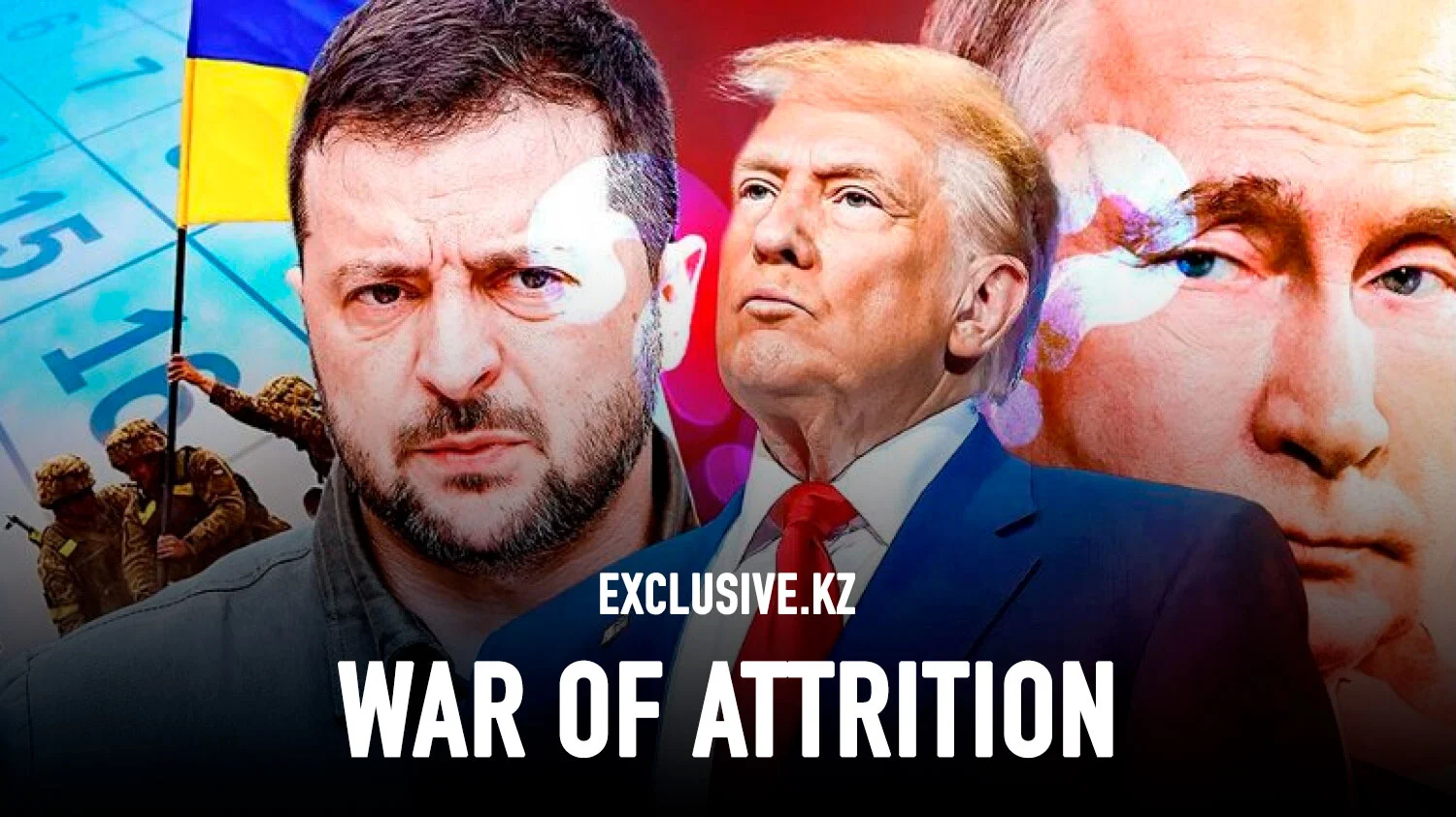
The “28-point plan for peace in Ukraine” that the United States has put forward is not for Ukraine. It is not even for Russia, though it was drafted with Russian input. Instead, the proposal seeks to benefit just one person: US President Donald Trump.
Like the Trump administration’s peace plan for Gaza, the Ukraine framework aims to deliver a quick foreign-policy “victory.” For a president who loves nothing more than portraying himself as a peacemaker, this is an opportunity not only to take credit for a ceasefire, but also to position himself as the linchpin of its implementation. Just as the Gaza ceasefire (which Israel has repeatedly violated) is being overseen by a Trump-led “Board of Peace,” the Ukraine peace would be “monitored and guaranteed” by a “Peace Council,” with Trump at the helm.
This does not mean Trump is committed to ensuring a durable peace. The plan is short on detail, meaning that hostilities are all but guaranteed to resume. But that is in the future – a region that does not much concern Trump. All that matters to him is distracting the US electorate from his association with the convicted pedophile Jeffrey Epstein.
As expected, the peace plan is skewed heavily in favor of Russia, meeting many of Russian President Vladimir Putin’s demands for ending the war: Crimea, Luhansk, and Donetsk would become Russian territories, with Ukraine withdrawing its forces from the part of Donetsk that it currently controls, and Ukraine would be prohibited from joining NATO. Meanwhile, Russia would be “reintegrated” into the global economy.

But Trump’s plan is hardly the resolution of Putin’s dreams. For starters, it requires Russia to enshrine in law a policy of non-aggression toward Europe and Ukraine, and it recognizes Ukraine’s eligibility for membership in the European Union. Moreover, $100 billion of Russia’s frozen assets would be invested in US-led reconstruction efforts in Ukraine, with the United States receiving 50% of the profits.
While sanctions against Russia would be lifted “in stages,” this process would be at Trump’s discretion, and the country’s oil revenues would be unlikely to recover any time soon. Trump is serious about establishing the US as a major global oil and gas dealer, so Russia would have to coordinate with the US to revive its beleaguered economy.
For now, Putin has welcomed the US plan as a basis for further discussion, but has made clear that he considers the war’s “current dynamic” favorable toward Russia, and thus that it will continue fighting if Ukraine does not agree to its terms. Putin knows that Russia can keep up the fight for a few more years, if necessary. Like his hero Joseph Stalin, he is perfectly willing to let ordinary Russians suffer in service of power.
Ukraine, for its part, has no good options. While the Trump administration is working with Ukrainian officials to “refine” the plan – incorporating priorities like security guarantees and political sovereignty – the country’s negotiating leverage is limited. After all, Ukraine remains wholly dependent on the West to finance and arm its defense; the situation on the ground currently favors Russia; and Ukraine faces severe manpower constraints. Making matters worse, Ukrainian President Volodymyr Zelensky’s government is now enmeshed in a high-level corruption scandal.
Ukraine’s fight is widely portrayed, including by Zelensky, as a defense of democratic values and international law – and for good reason. But Ukraine has long grappled with corruption. While progress was made on this front following the 2014 Maidan revolution, the war opened up new opportunities for graft, particularly among Zelensky’s inner circle.
Many members of this elite club were under investigation by Ukraine’s independent corruption watchdogs, the National Anti-Corruption Bureau of Ukraine (NABU) and the Specialized Anti-Corruption Prosecutor’s Office (SAPO), in July, when Zelensky pushed through legislation that would hobble them. He probably figured that Ukrainians and their European allies would be too focused on the war to take much notice. But he was wrong. The popular backlash was so powerful that the government had little choice but to reverse course.
Now, the NABU and the SAPO have uncovered an embezzlement scheme at Energoatom – the state-run consortium that manages Ukraine’s nuclear power stations – led by Zelensky’s former business partner Timur Mindich. Several high-ranking officials are implicated, including the now-dismissed justice minister, German Galushchenko, former Deputy Prime Minister Alexei Chernyshov, and current Secretary of the National Security and Defense Council Rustem Umerov. Zelensky claims he knew nothing about the scheme.
After the scandal broke, some European officials called for greater transparency regarding how Ukraine allocates funds. But EU leaders have so far refrained from condemning Zelensky harshly, for fear that the revelations will be used to force unacceptable peace terms on Ukrainians at a time when formal democratic processes in Ukraine are suspended by martial law. Instead, the EU has focused on delivering a counter-proposal to Trump’s plan, which does not rule out the possibility of NATO membership and postpones negotiations on territorial exchanges until after a ceasefire is in place.
The conspiracy theorists are working overtime. Despite acting surprised by Trump’s peace plan, German Chancellor Friedrich Merz knew about it a month before its release, which some have used to suggest that corruption revelations were all part of a European plot to increase Zelensky’s dependence on the EU. There are also conflicting reports about Umerov’s influence over the US proposal – specifically, the clause that would grant “full amnesty” to all parties for their “actions during the war.”
Zelensky may well be able to convince European leaders to remain focused on the “real enemy”: Russia. But further corruption revelations will only weaken his position within Ukraine, where protests are already brewing, and in negotiations with the US. Ultimately, it is ordinary Ukrainians who will pay the price. Putin will secure significant gains, if not everything he wanted, and Trump will get to declare that he and he alone ended a grinding war of attrition.
Copyright: Project Syndicate, 2025. www.project-syndicate.org

Все комментарии проходят предварительную модерацию редакцией и появляются не сразу.